

Baptisia simplicifolia
scareweed
Fabaceae (Leguminosae)
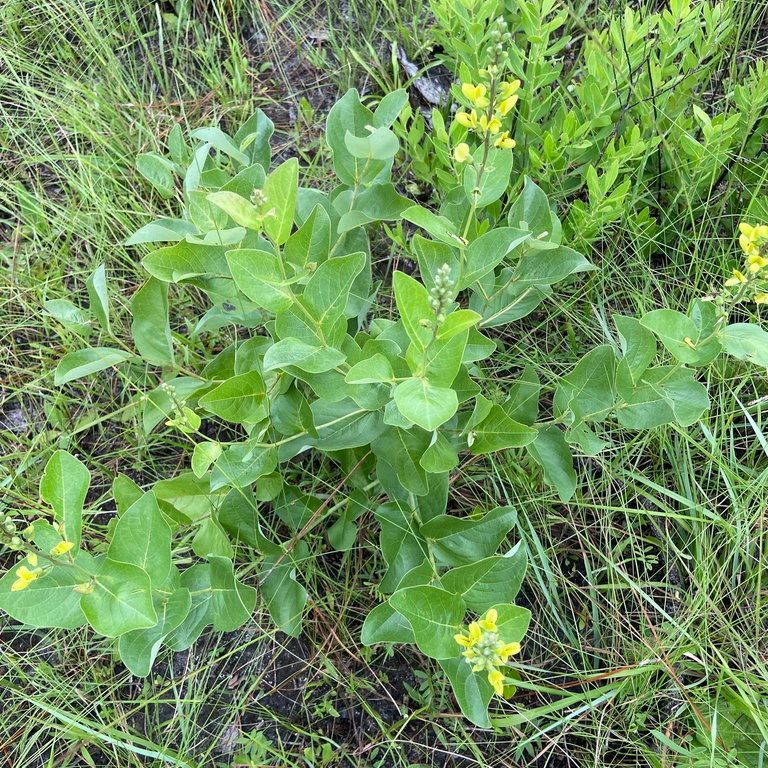
Plant Specifics
Form:
flower
Size:
1.5 to 3 ft tall.
Life Span:
long-lived perennial
Flower Color:
pale yellow, greenish yellow
Fruit Color:
black, woody pods
Phenology:
Winter dormant. Plant dries and breaks off becoming a tumbleweed.
Noted For:
Showy Flowers
Landscaping
Recommended Uses:
Treat as a small shrub even though this is not woody or use as a background plant in a wildflower garden.
Considerations:
Toxic to livestock and humans.
Light:
Full Sun, Part Sun
Moisture Tolerance:
Somewhat moist, no flooding ---- to ---- Short very dry periods
Salt Water Flooding Tolerance:
Unknown
Salt Spray/Salty Soil Tolerance:
Low/no tolerance of salty wind or direct salt spray
Soil or Other Substrate:
Sand, Clay, Loam
Suitable to Grow In:
8A,8B,9A,9B
Ecology
Wildlife:
Pollinators, Caterpillars, Mammals
Larval host for wild indigo duskywing ( Erynnis baptisiae ) and Zarucco duskywing ( Erynnis zarucco ) butterflies.
Pollinated by bumble bees.
Deer and rabbits browse the foliage, and as a legume it provides nutritious, protein-rich food.
Native Habitats:
Flatwoods, sandhills and other upland open pinelands

