
Batis maritima
saltwort, turtleweed
Bataceae
Plant Specifics
Form:
shrub
Size:
2-4 ft tall by much broader than tall ft wide
Life Span:
long-lived perennial
Flower Color:
white,green
Fruit Color:
Phenology:
evergreen
Noted For:
Interesting Foliage
Landscaping
Recommended Uses:
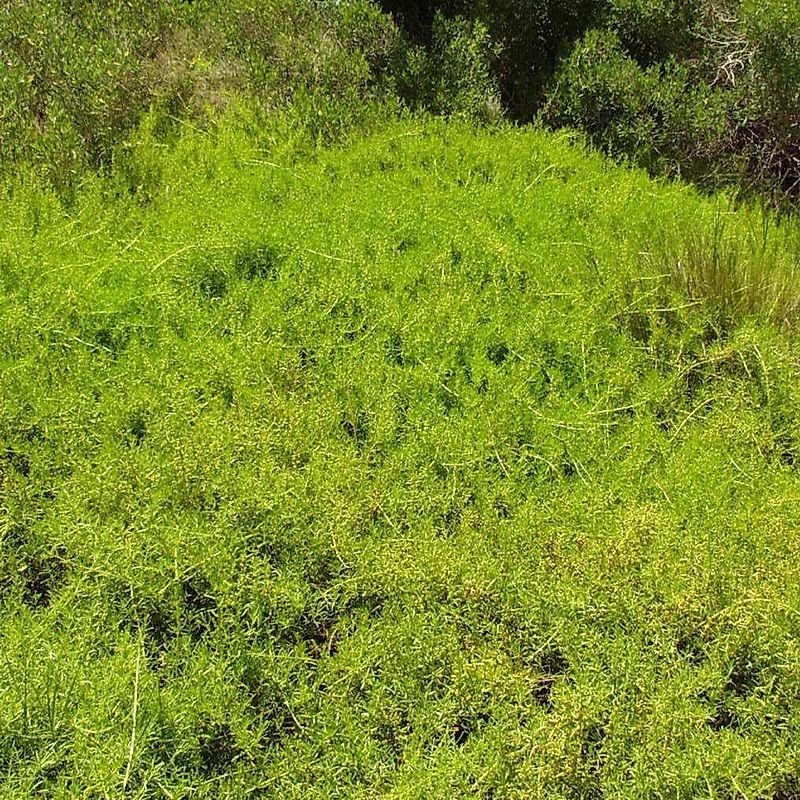
Coastal stabilization is salt-flat areas. Can be used ornamentally as a groundcover or bush-like mound in coastal areas.
Considerations:
Light:
Full Sun
Moisture Tolerance:
Usually moist, occasional inundation ---- to ---- Usually moist, occasional inundation
Salt Water Flooding Tolerance:
Unknown
Salt Spray/Salty Soil Tolerance:
High. Can tolerate significant and ongoing amounts of salt.
Soil or Other Substrate:
Sand
Suitable to Grow In:
Ecology
Wildlife:
Butterflies, Caterpillars
Larval host and adult nectar plant for the great Southern white ( Ascia monuste ) and Eastern pigmy blue ( Brephidium isophthalma ) butterflies (Florida Cooperative Extension Service 2002)
Native Habitats:
Saltmarshes and flats.

