
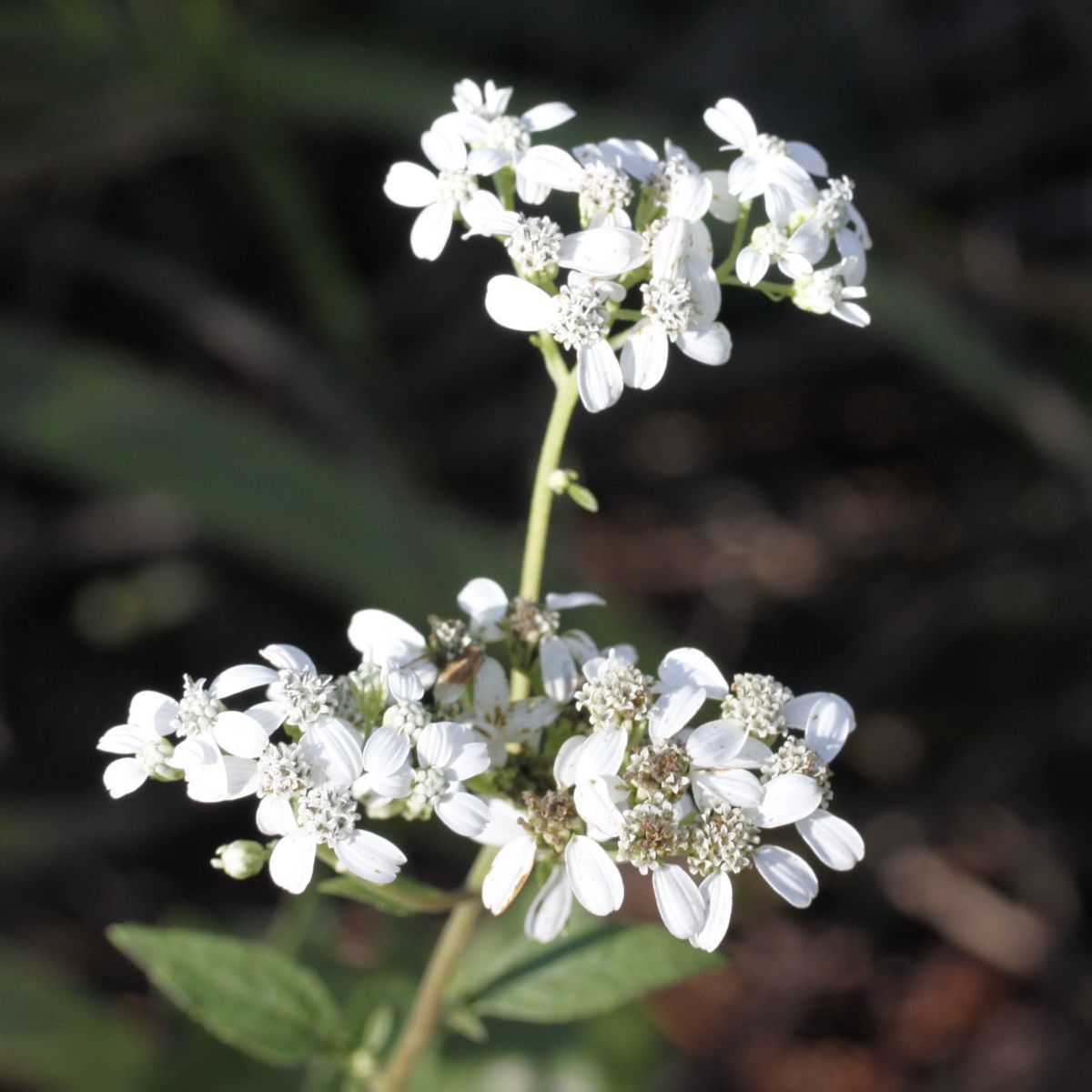
Verbesina virginica
frostweed, white crownbeard
Asteraceae (Compositae)
Plant Specifics
Form:
flower
Size:
4-5 (6) ft
Life Span:
long-lived perennial
Flower Color:
Fruit Color:
Phenology:
winter dormant
Noted For:
Showy Flowers
Landscaping
Recommended Uses:
Background plant in a wildflower garden. Also useful as a mass planting along a forest edge. This plant is best used in informal settings and does well if allowed to naturalize.
Considerations:
Light:
Part Sun, Shade
Moisture Tolerance:
Usually moist, occasional inundation ---- to ---- Not wet but not extremely dry
Salt Water Flooding Tolerance:
Unknown
Salt Spray/Salty Soil Tolerance:
Low/no tolerance of salty wind or direct salt spray
Soil or Other Substrate:
Sand, Clay, Loam
Suitable to Grow In:
8A,8B,9A,9B,10A,10B
Ecology
Wildlife:
Pollinators, Butterflies
Attracts native bees.
Nectar source for butterflies.
Native Habitats:
Moist forest edges.

