Vaccinium myrsinites
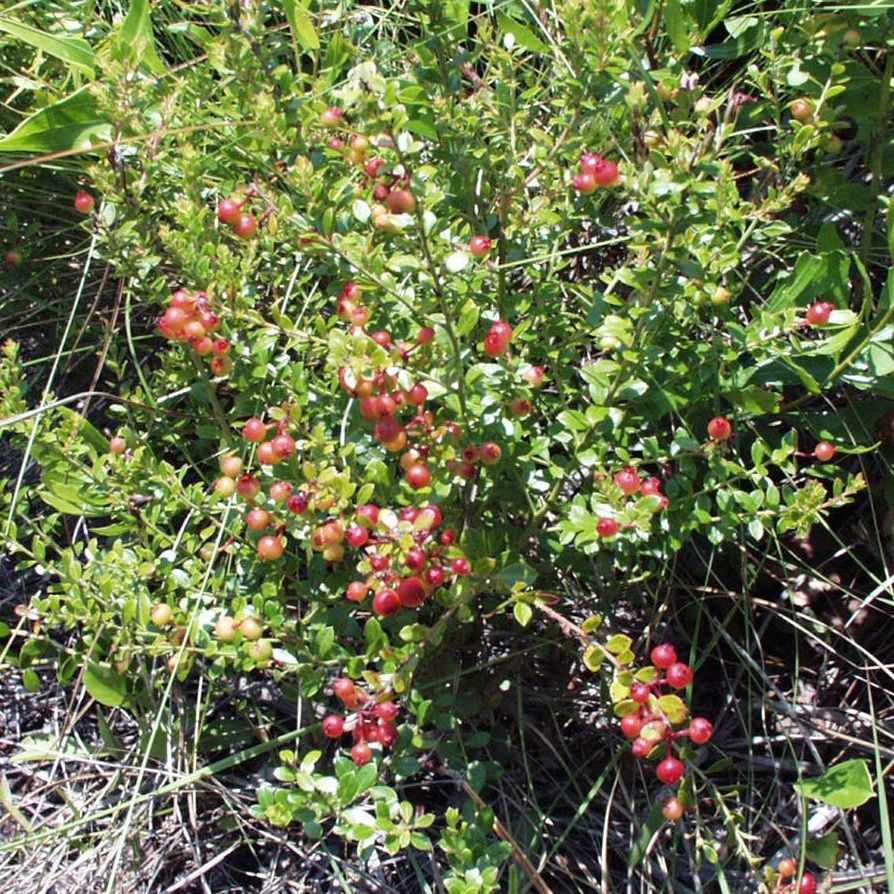
shiny blueberry
Ericaceae
Plant Specifics
Form:
shrub
Size:
1-2 ft tall by spreading ft wide
Life Span:
short-lived perennial
Flower Color:
white,pink
Fruit Color:
blue, black
Phenology:
evergreen. Blooms in mid-spring.
Noted For:
Showy Flowers, Fall Color, Interesting Foliage
Landscaping
Recommended Uses:
Best used as a wildflower as it has a relatively short lifespan.
Considerations:
Light:
Full Sun, Part Sun
Moisture Tolerance:
Somewhat moist, no flooding ---- to ---- Very long very dry periods
Salt Water Flooding Tolerance:
Unknown
Salt Spray/Salty Soil Tolerance:
Some tolerance to salty wind but not direct salt spray
Soil or Other Substrate:
Sand
Suitable to Grow In:
8A,8B,9A,9B,10A,10B,11
Ecology
Wildlife:
Caterpillars, Birds, Mammals
Attracts pollinators. Documented bee species include Augochlorella aurata, A. gratiosa, Augochloropsis anonyma, A. sumptuosa and Coelioxys say (Deyrup et al. 2002).
Birds and other wildlife consume the fruit.
Native Habitats:
Scrub, scrubby flatwoods, flatwoods, high pine, cutthroat seep.

