
Vaccinium darrowii
Darrow's blueberry
Ericaceae
Plant Specifics
Form:
shrub
Size:
to 2 ft tall by about 2 ft wide-spreading by rhisomes to form clones typically up to about 50 ft wide.
Life Span:
long-lived perennial
Flower Color:
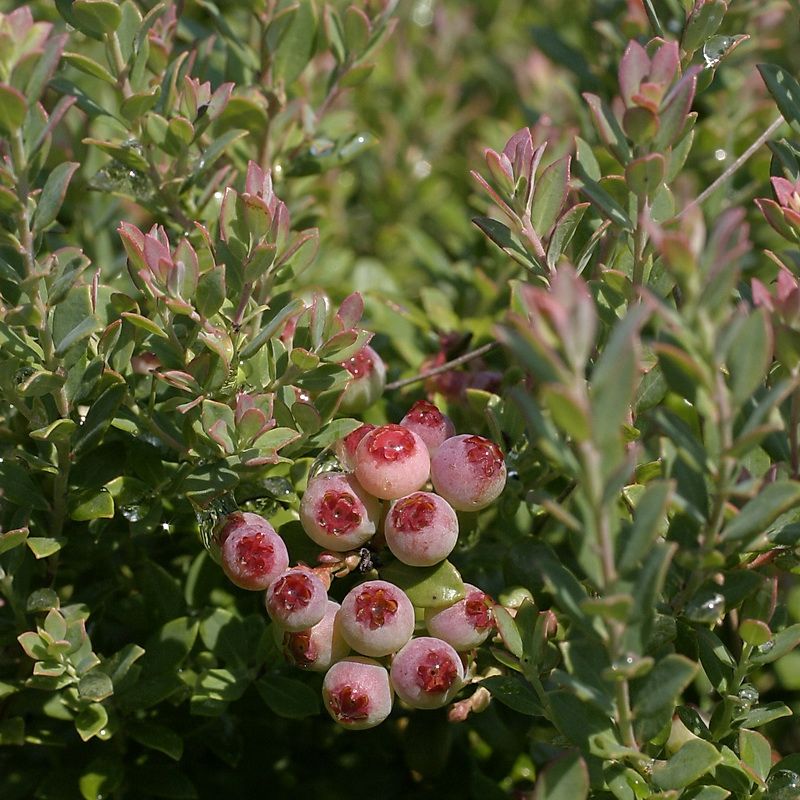
white,pink
Fruit Color:
blue, purple, black
Phenology:
Evergreen. Blooms in early spring. Fruits ripe in late spring.
Noted For:
Showy Flowers, Showy Fruits, Interesting Foliage
Landscaping
Recommended Uses:
Low hedge or border plant, specimen plant in a wildflower garden, mass planting.
Considerations:
Must have acidic soil.
Light:
Full Sun, Part Sun
Moisture Tolerance:
Somewhat moist, no flooding ---- to ---- Not wet but not extremely dry
Salt Water Flooding Tolerance:
Unknown
Salt Spray/Salty Soil Tolerance:
Low/no tolerance of salty wind or direct salt spray
Soil or Other Substrate:
Sand
Suitable to Grow In:
8A,8B,9A,9B,10A
Ecology
Wildlife:
Caterpillars, Birds, Mammals
Attracts various pollinators, especially native bees. Documented bee species include Agapostemon splendens, Augochlorella aurata, A. gratiosa and Apis mellifera (honeybee) (Deyrup et al. 2002).
Birds and other wildlife consume the fruit.
Native Habitats:
Moist sites. Flatwoods, scrubby flatwoods.

