Ulmus rubra
red elm, slippery elm
Ulmaceae
Plant Specifics
Form:
tree
Size:
40-60 ft tall by 30-50 ft wide
Life Span:
long-lived perennial
Flower Color:
Fruit Color:
Phenology:
deciduous
Noted For:
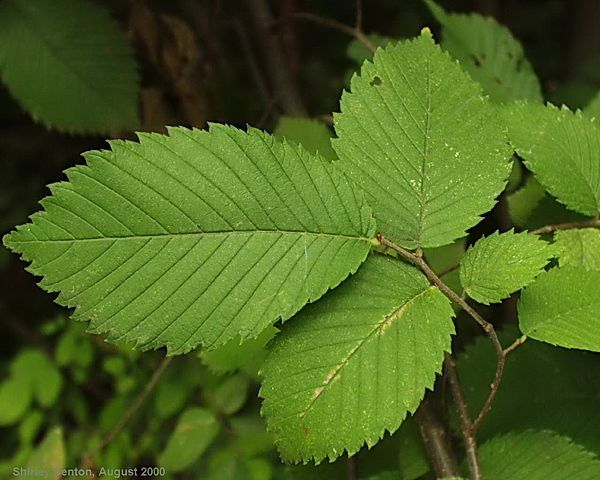
Fall Color, Interesting Foliage
Landscaping
Recommended Uses:
Medium shade tree for informal settings. Somewhat coarse in texture.
Considerations:
Susceptible the Dutch elm disease.
Light:
Part Sun
Moisture Tolerance:
Usually moist, occasional inundation ---- to ---- Not wet but not extremely dry
Salt Water Flooding Tolerance:
Unknown
Salt Spray/Salty Soil Tolerance:
Low/no tolerance of salty wind or direct salt spray
Soil or Other Substrate:
Sand, Clay, Loam
Suitable to Grow In:
Ecology
Wildlife:
Caterpillars, Birds
Larval host for question mark butterfy ( Polygonia interrogationis ).
Seeds used by songbirds when little else is available. Used for nesting.
Native Habitats:
Rich mesic to dry mesic forests, wooded bluffs, calcareous soils.