

Tripsacum dactyloides
eastern gamagrass, Fakahatchee grass
Poaceae (Gramineae)
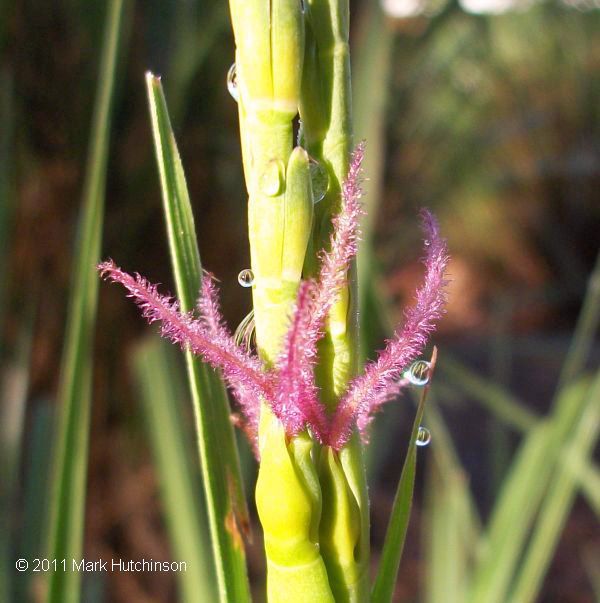
Plant Specifics
Form:
Size:
Life Span:
long-lived perennial
Flower Color:
Fruit Color:
Phenology:
Noted For:
Landscaping
Recommended Uses:
Considerations:
Can die back and become messy during cold winters, but new growth covers it in the spring.
Light:
Moisture Tolerance:
Usually moist, occasional inundation ---- to ---- Not wet but not extremely dry
Salt Water Flooding Tolerance:
Unknown
Salt Spray/Salty Soil Tolerance:
Some tolerance to salty wind but not direct salt spray
Soil or Other Substrate:
Sand, Loam
Suitable to Grow In:
8A,8B,9A,9B,10A,10B
Ecology
Wildlife:
Larval host for three-spotted skipper ( Cymaenes tripunctus ), clouded skipper ( Lerema accius ) and Byssusskipper ( Problema byssus ) (Minno and Minno, 1999).
Even when trimmed occasionally, Gama Grass will provide cover for small mammals, birds, and reptiles. Deer eat the seeds.
Native Habitats:

