

Trichostema dichotomum
forked bluecurls
Lamiaceae (Labiatae)
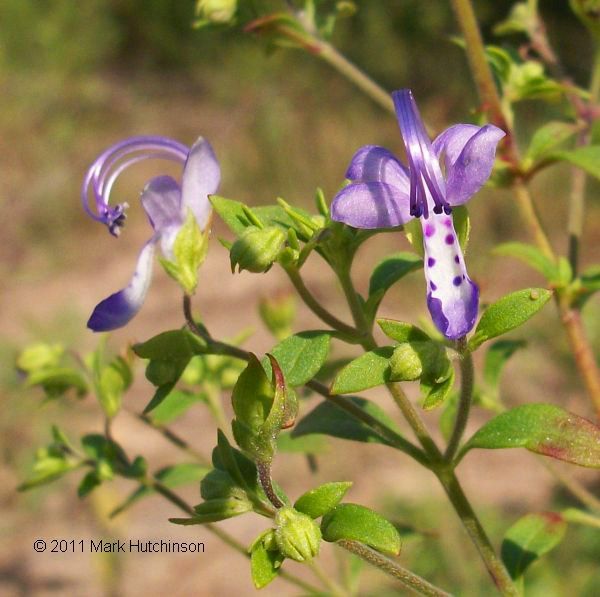
Plant Specifics
Form:
flower
Size:
2-3 ft tall by 1-2 ft wide
Life Span:
annual
Flower Color:
blue
Fruit Color:
Phenology:
Noted For:
Showy Flowers, Aroma/Showy Fruitsagrance
Landscaping
Recommended Uses:
Wildflower garden. Appreciated for its interesting flowers and nectar plant. Grow as an annual.
Considerations:
May seed overly enthusiastically.
Light:
Full Sun
Moisture Tolerance:
Not wet but not extremely dry ---- to ---- Very long very dry periods
Salt Water Flooding Tolerance:
Unknown
Salt Spray/Salty Soil Tolerance:
Moderate. Tolerant of salty wind and may get some salt spray.
Soil or Other Substrate:
Sand
Suitable to Grow In:
8A,8B,9A,9B,10A,10B,11
Ecology
Wildlife:
Pollinators
Attracts various pollinators, especially bees.. Documented bees include Caupolicana electa and Dialictus placidensis (Deyrup et al. 2002).
Native Habitats:
Scrub, xeric hammock, overgrown sandhill, flatwoods.

