
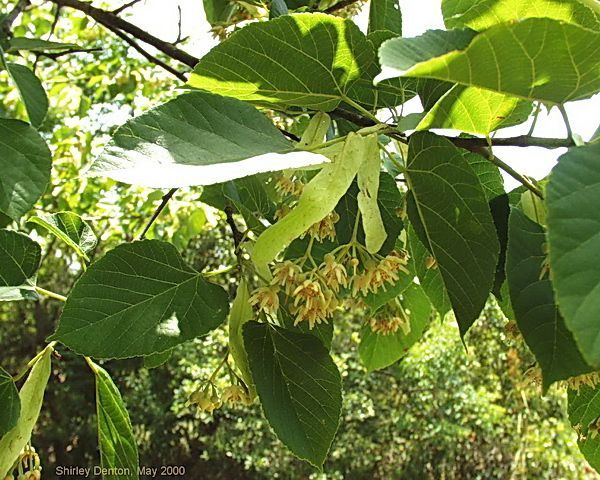
Tilia americana
basswood, American linden, bee tree
Malvaceae
Plant Specifics
Form:
tree
Size:
60-80 ft tall by 40-60 ft wide
Life Span:
long-lived perennial
Flower Color:
white,yellow,green
Fruit Color:
brown
Phenology:
Deciduous. Blooms in spring. Fruit ripens in fall.
Noted For:
Fall Color, Interesting Foliage
Landscaping
Recommended Uses:
Shade tree for mid-moisture sites.
Considerations:
Dense shade produced by this tree will limit what can be grown under it.
Light:
Part Sun, Shade
Moisture Tolerance:
Usually moist, occasional inundation ---- to ---- Not wet but not extremely dry
Salt Water Flooding Tolerance:
Unknown
Salt Spray/Salty Soil Tolerance:
Low/no tolerance of salty wind or direct salt spray
Soil or Other Substrate:
Sand, Clay, Loam
Suitable to Grow In:
Ecology
Wildlife:
Pollinators, Caterpillars, Mammals
- Flowers fragrant and attractive to insects, especially bees.
- Larval host for red spotted purple butterfly.
Seeds eaten by a variety of small mammals, especially rodents.
Native Habitats:
Mesic forests.

