
Sideroxylon celastrinum
saffron-plum
Sapotaceae
Plant Specifics
Form:
tree
Size:
10-25 ft
Life Span:
long-lived perennial
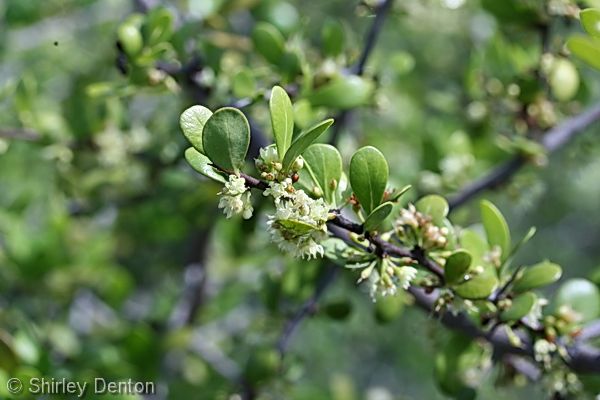
Flower Color:
white
Fruit Color:
black
Phenology:
evergreen
Noted For:
Showy Flowers, Aroma/Showy Fruitsagrance, Hurricane Wind Resistance, Thorns, Interesting Foliage
Landscaping
Recommended Uses:
Hedge plant. Screen plant.
Considerations:
Thorns.
Light:
Full Sun, Part Sun
Moisture Tolerance:
Somewhat moist, no flooding ---- to ---- Not wet but not extremely dry
Salt Water Flooding Tolerance:
Unknown
Salt Spray/Salty Soil Tolerance:
Moderate. Tolerant of salty wind and may get some salt spray.
Soil or Other Substrate:
Sand, Lime Rock
Suitable to Grow In:
Ecology
Wildlife:
Pollinators, Birds, Mammals
Appreciated by a variety of insects as a nectar source.
Fruit are eaten by birds and mammals. It provides nesting sites and cover. .
Native Habitats:
Coastal hammocks, salt flats.

