

Sesuvium portulacastrum
sea-purslane, shoreline seapurslane, cenicilla
Aizoaceae
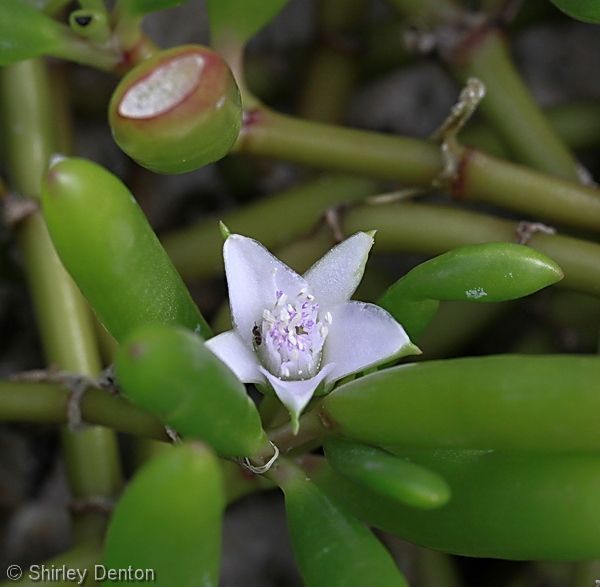
Plant Specifics
Form:
flower
Size:
.3-.5 ft tall by wide-spreading ft wide
Life Span:
long-lived perennial
Flower Color:
pink,lavender
Fruit Color:
Phenology:
Evergreen. Succulent. Blooms year round.
Noted For:
Showy Flowers, Interesting Foliage
Landscaping
Recommended Uses:
Use as a groundcover in moist coastal settings.
Considerations:
Light:
Full Sun
Moisture Tolerance:
Aquatic ---- to ---- Not wet but not extremely dry
Salt Water Flooding Tolerance:
Unknown
Salt Spray/Salty Soil Tolerance:
High. Can tolerate significant and ongoing amounts of salt.
Soil or Other Substrate:
Suitable to Grow In:
8A,8B,9A,9B,10A,10B,11
Ecology
Wildlife:
Pollinators, Butterflies
Nectar plant for Miami blue ( Cyclargus thomasi bethunebakeri ) butterflies (USFWS, Federal Register, 2011-08-10 )
Attracts native bees including metallic bees.
Native Habitats:
Coastal forests, coastal dunes.

