

Scaevola plumieri
beachberry, inkberry, gullfeed
Goodeniaceae
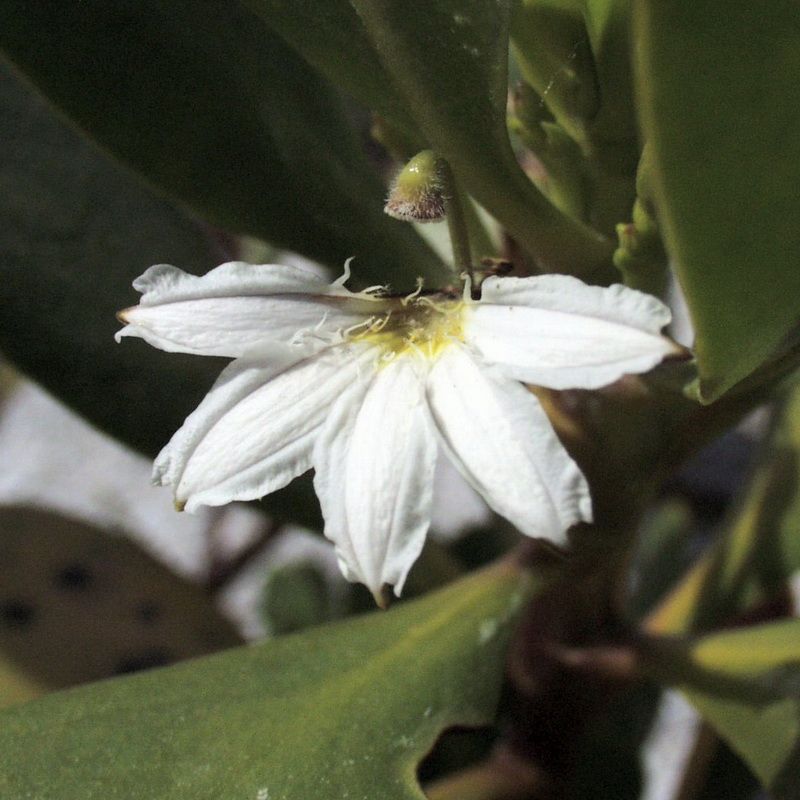
Plant Specifics
Form:
shrub
Size:
4-6 ft tall by 4-8 ft wide
Life Span:
long-lived perennial
Flower Color:
white
Fruit Color:
black
Phenology:
evergreen
Noted For:
Showy Flowers, Interesting Foliage
Landscaping
Recommended Uses:
If present in the landscape, retain. Use as a shrub in coastal areas where it can make a nice screen, form a hedge, or be a foundation plant. Also appropriate for dune stabilization.
Considerations:
Light:
Full Sun
Moisture Tolerance:
Not wet but not extremely dry ---- to ---- Very long very dry periods
Salt Water Flooding Tolerance:
Unknown
Salt Spray/Salty Soil Tolerance:
High. Can tolerate significant and ongoing amounts of salt.
Soil or Other Substrate:
Sand
Suitable to Grow In:
10A,10B,11
Ecology
Wildlife:
Pollinators, Birds
Bees are believed to be the primary pollinators. Also attracts wasps, moths, and ants.
Fruits attract birds.
Native Habitats:
Coastal sites.

