
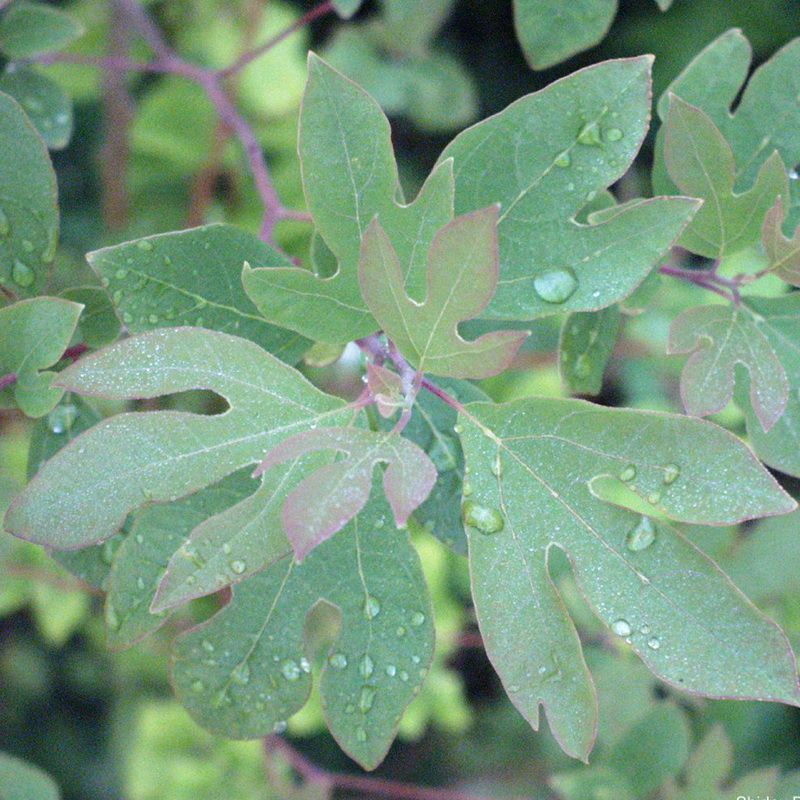
Sassafras albidum
sassafras
Lauraceae
Plant Specifics
Form:
Size:
Life Span:
long-lived perennial
Flower Color:
Fruit Color:
Phenology:
Noted For:
Landscaping
Recommended Uses:
Considerations:
Like other members of this family, sassafras trees are threatened by the spread of the redbay ambrosia beetle and the laural wilt fungus it carries. Mildly toxic, especially the bark.
Light:
Moisture Tolerance:
Somewhat moist, no flooding ---- to ---- Very long very dry periods
Salt Water Flooding Tolerance:
Unknown
Salt Spray/Salty Soil Tolerance:
Low/no tolerance of salty wind or direct salt spray
Soil or Other Substrate:
Sand, Clay, Loam
Suitable to Grow In:
8A,8B,9A,9B
Ecology
Wildlife:
Larval food for spicebush butterfly( Papilio troilus ), tiger swallow-tail( papilio glaucus ), palamedes butterfly ( Papilio palamedes ).
Flowers attract pollinators.
Birds consume fruit.
Native Habitats:

