

Salix humilis
prairie willow, dwarf willow
Salicaceae
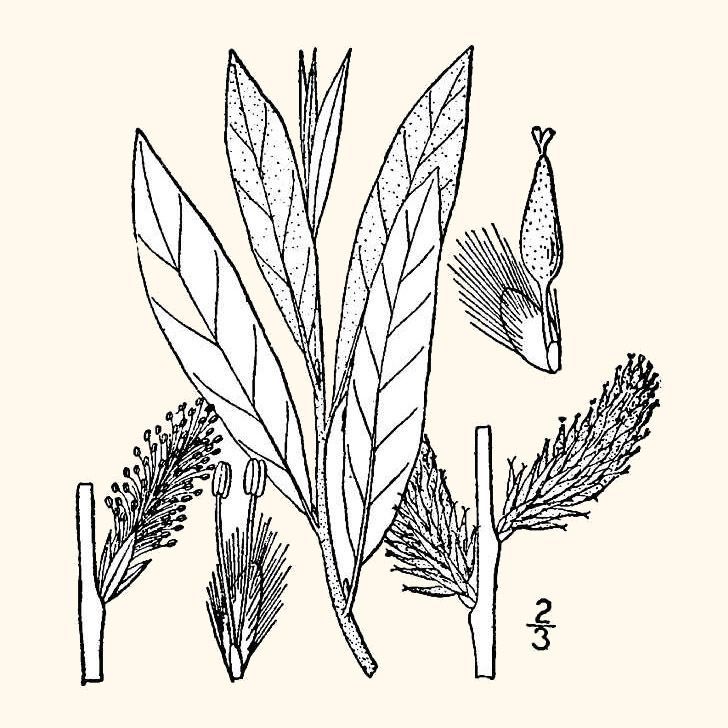
Plant Specifics
Form:
shrub
Size:
4 ft
Life Span:
long-lived perennial
Flower Color:
yellow
Fruit Color:
white
Phenology:
deciduous
Noted For:
Showy Flowers, Interesting Foliage
Landscaping
Recommended Uses:
Background shrub.
Considerations:
Fast growing, short-lived.
Light:
Full Sun, Part Sun
Moisture Tolerance:
Usually moist, occasional inundation ---- to ---- Not wet but not extremely dry
Salt Water Flooding Tolerance:
Unknown
Salt Spray/Salty Soil Tolerance:
Low/no tolerance of salty wind or direct salt spray
Soil or Other Substrate:
Sand, Clay, Loam, Organic
Suitable to Grow In:
Ecology
Wildlife:
Pollinators, Caterpillars, Birds, Mammals
- The catkins of Prairie Willow attract primarily small bees and flies (harvest pollen), wind pollinated.
- Caterpillars of Limenitis archippus (Viceroy) feed on the leaves of willows.
Early season food for some wildlife. Provides cover and nesting areas for birds.
Native Habitats:
Swamps, stream banks, sand and gravel bars, ditches, wet thickets.

