

Salix caroliniana
Carolina willow, coastalplain willow
Salicaceae
Plant Specifics
Form:
tree
Size:
25-60 ft tall by 20-40 ft wide
Life Span:
long-lived perennial
Flower Color:
yellow
Fruit Color:
white
Phenology:
deciduous
Noted For:
Showy Fruits, Interesting Bark
Landscaping
Recommended Uses:
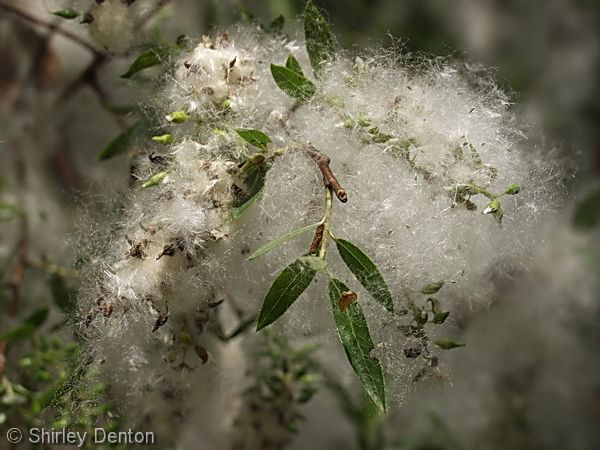
Casual lanscapes, moist areas, rain gardens or bioswales. This tree can be attractive most of the year due to its fairly fine leaves. It is at its best for a brief period in early spring when it blooms (yellow) and then sets masses of white fruit at a time when little else is blooming. Will tolerate root disturbance and flooding.
Considerations:
Weak wood, easily broken.
Light:
Full Sun
Moisture Tolerance:
Aquatic ---- to ---- Not wet but not extremely dry
Salt Water Flooding Tolerance:
Unknown
Salt Spray/Salty Soil Tolerance:
Some tolerance to salty wind but not direct salt spray
Soil or Other Substrate:
Sand, Loam
Suitable to Grow In:
8A,8B,9A,9B,10A,10B
Ecology
Wildlife:
Pollinators, Caterpillars
Larval host plant for Viceroy ( Basilarchia archippus ).
The species is wind pollinated, but bees harvest pollend from the male flowers. Observed species include Dialictus nymphalis and D. tegularis (Deyrup et al. 2002).
Native Habitats:
Swamps, marshes, floodplains, glades around gator holes. Open, wet, sunny areas.

