

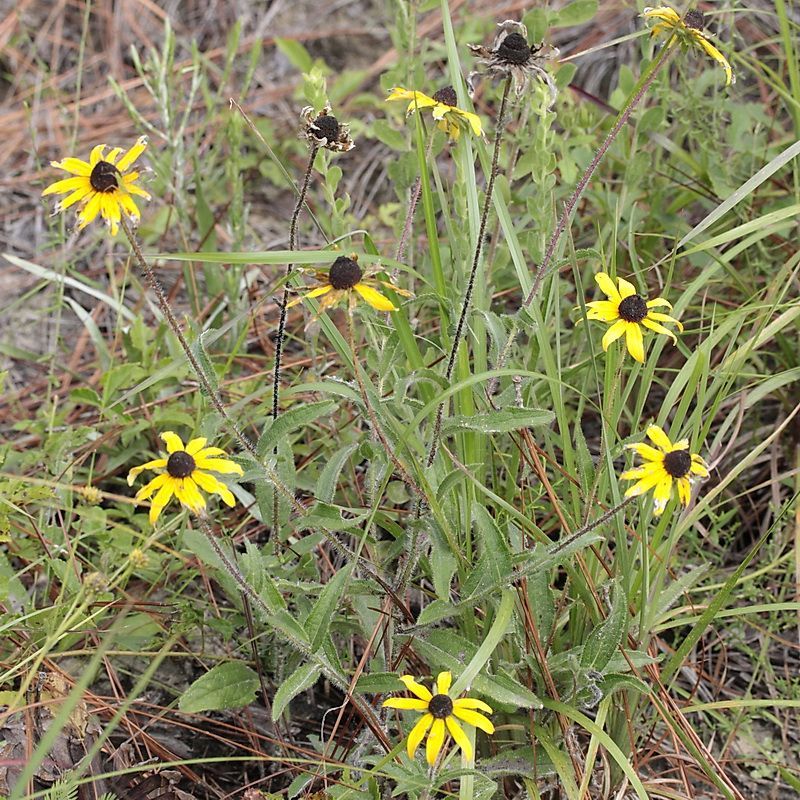
Rudbeckia hirta
black-eyed susan
Asteraceae
Plant Specifics
Form:
flower
Size:
2-3 ft tall by 1-2 ft wide
Life Span:
short-lived perennial
Flower Color:
yellow
Fruit Color:
brown
Phenology:
Blooms spring-fall.
Noted For:
Showy Flowers
Landscaping
Recommended Uses:
Wildflower gardens, roadside wildflowers, meadows.
Considerations:
Light:
Full Sun
Moisture Tolerance:
Somewhat moist, no flooding ---- to ---- Very long very dry periods
Salt Water Flooding Tolerance:
Unknown
Salt Spray/Salty Soil Tolerance:
Low/no tolerance of salty wind or direct salt spray
Soil or Other Substrate:
Sand
Suitable to Grow In:
8A,8B,9A,9B,10A,10B
Ecology
Wildlife:
Pollinators, Butterflies, Birds
Attracts bumble bees, butterflies
Larval host for the silvery checkerspot, found only in extreme north Florida.
Seeds eaten by small birds such as finches.
Native Habitats:
Predominantly ruderal. Roadsides and waste places.

