

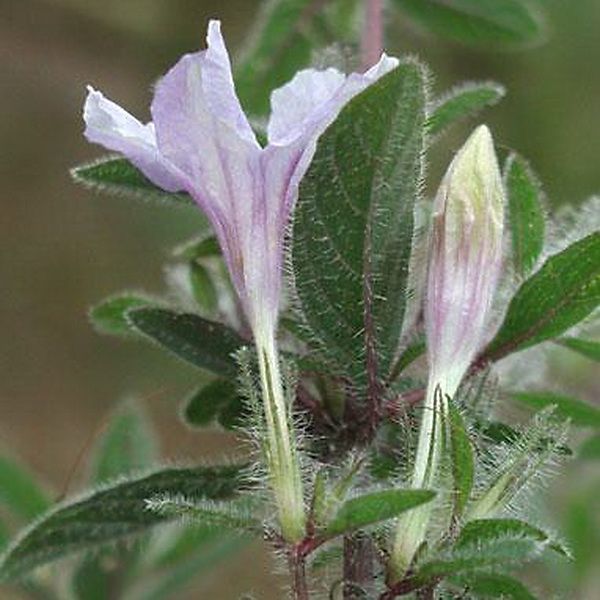
Ruellia caroliniensis
Carolina wildpetunia, wild petunia
Acanthaceae
Plant Specifics
Form:
flower
Size:
1.0 to 2.5 ft tall by .75 to 2.0 ft wide
Life Span:
long-lived perennial
Flower Color:
blue,lavender
Fruit Color:
green,brown
Phenology:
Winter dormant Blooms early spring to late-summer.
Noted For:
Showy Flowers
Landscaping
Recommended Uses:
Groundcover along with other low-growing wildflowers.
Considerations:
Light:
Full Sun, Part Sun, Shade
Moisture Tolerance:
Usually moist, occasional inundation ---- to ---- Somewhat long very dry periods
Salt Water Flooding Tolerance:
Unknown
Salt Spray/Salty Soil Tolerance:
Some tolerance to salty wind but not direct salt spray
Soil or Other Substrate:
Sand
Suitable to Grow In:
8A,8B,9A,9B,10A,10B,11
Ecology
Wildlife:
Pollinators, Caterpillars
Larval host for Common Buckeye ( Junonia coenia ) and White Peacock ( Anartia jatrophae ) butterflies.
Attracts many pollinators.
Native Habitats:
Dry mesic hammocks, flatwoods, sandhill, disturbed areas.

