

Asclepias tomentosa
velvetleaf milkweed
Apocynaceae
Plant Specifics
Form:
flower
Size:
2-3 ft.
Life Span:
long-lived perennial
Flower Color:
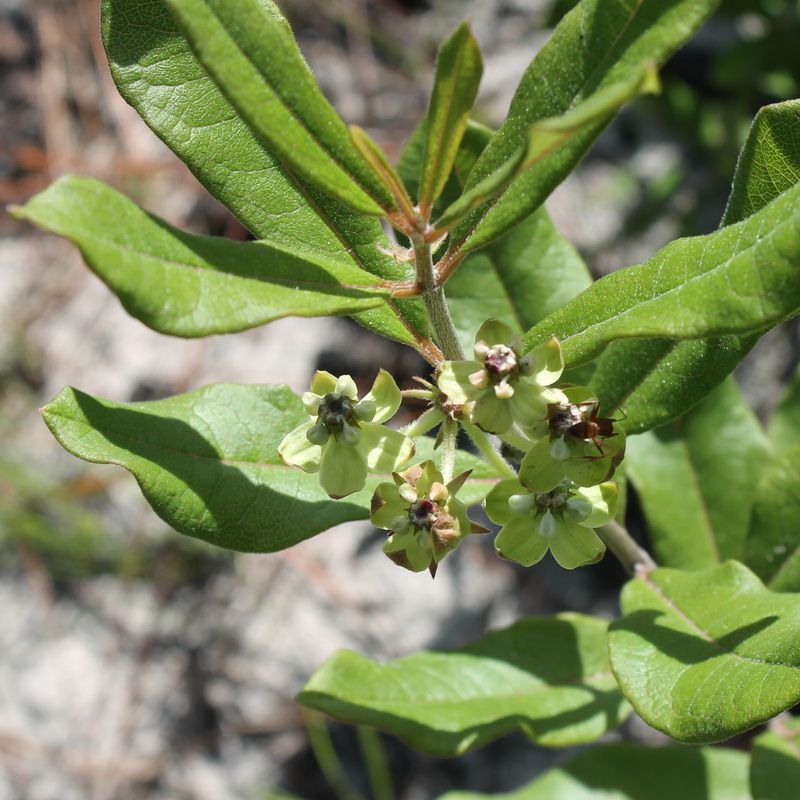
greenish with highlights of pink or maroon
Fruit Color:
green, seeds with tufts of white hair
Phenology:
Winter dormant, blooms April-August
Noted For:
Landscaping
Recommended Uses:
Wildflower garden, dry wildflower meadow
Considerations:
Light:
Moisture Tolerance:
Not wet but not extremely dry ---- to ---- Somewhat long very dry periods
Salt Water Flooding Tolerance:
Unknown
Salt Spray/Salty Soil Tolerance:
Unknown
Soil or Other Substrate:
Suitable to Grow In:
Ecology
Wildlife:
Butterflies, Caterpillars
Larval host for monach ( Danaus plexippus ) , queen ( Danaus gilippus ) and soldier ( Danaus eresimus ) butterflies.
Nectar plant for many butterfly species.
Native Habitats:
scrub, sandhill, edges of xeric hammocks, scrubby flatwoods

