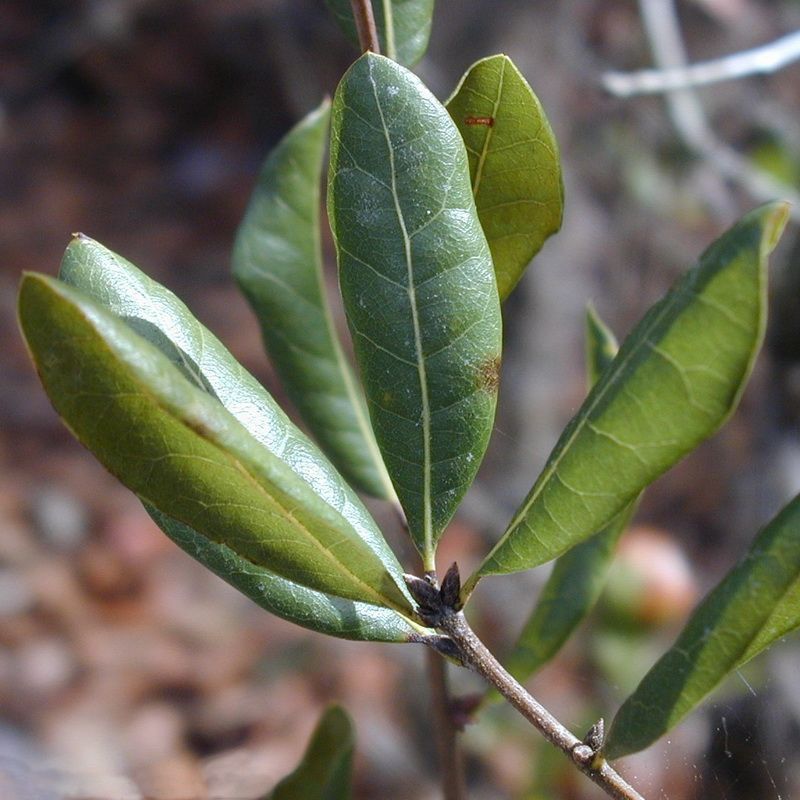
Quercus inopina
scrub oak
Fagaceae
Plant Specifics
Form:
Size:
Life Span:
long-lived perennial
Flower Color:
Fruit Color:
Phenology:
Noted For:
Landscaping
Recommended Uses:
Considerations:
Light:
Moisture Tolerance:
Not wet but not extremely dry ---- to ---- Very long very dry periods
Salt Water Flooding Tolerance:
Unknown
Salt Spray/Salty Soil Tolerance:
Moderate. Tolerant of salty wind and may get some salt spray.
Soil or Other Substrate:
Sand
Suitable to Grow In:
8A,8B,9A,9B
Ecology
Wildlife:
Larval host for Horace's duskywing (Erynnis horatius), red-banded hairstreak ( Calycopis cecrops ) and white-M hairstreak ( Parrhasius m-album ) butterflies.
Small mammals use the acorns.
Provides significant food and cover for wildlife.
The acorns are utilized by squirrels.
An important food source for the Florida scrub-jay as the tannins in the nuts help it remain edible through the winter; scrub-jays may also use it for nesting and perching
Native Habitats:

