
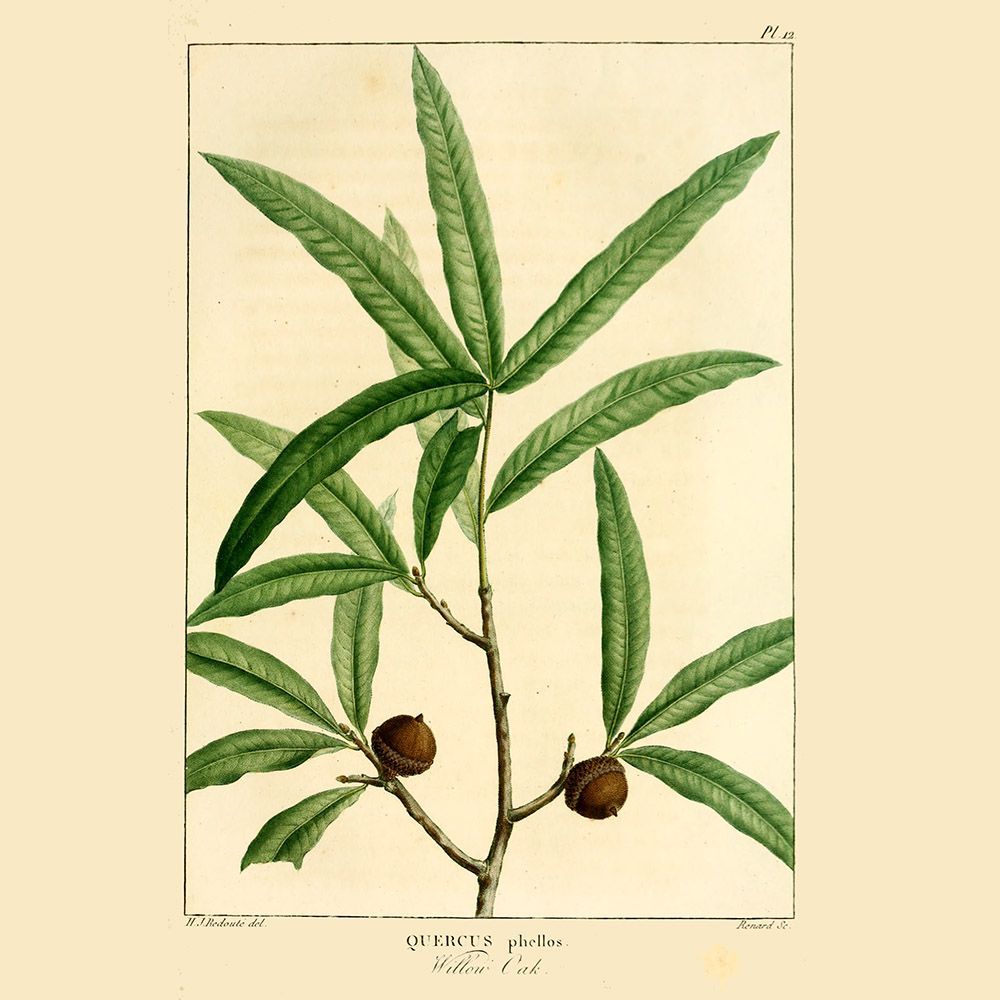
Quercus phellos
willow oak
Fagaceae
Plant Specifics
Form:
Size:
Life Span:
long-lived perennial
Flower Color:
Fruit Color:
Phenology:
Noted For:
Landscaping
Recommended Uses:
Considerations:
Fallen/falling acorns may be an issue.
Light:
Moisture Tolerance:
Usually moist, occasional inundation ---- to ---- Somewhat long very dry periods
Salt Water Flooding Tolerance:
Unknown
Salt Spray/Salty Soil Tolerance:
Moderate. Tolerant of salty wind and may get some salt spray.
Soil or Other Substrate:
Clay, Loam
Suitable to Grow In:
8A,8B,9A,9B
Ecology
Wildlife:
Host plant for the banded hairstreak, Edward's hairstreak, gray hairstreak, white-M hairstreak, Horace's duskywing, Juvenal's duskywing butterflies and many moths.
Acorns are eaten by woodpeckers, songbirds, ducks, small mammals, wild turkeys, white-tailed deer, quail and black bears
Provides cover and nesting areas for birds and squirrels
Native Habitats:

