
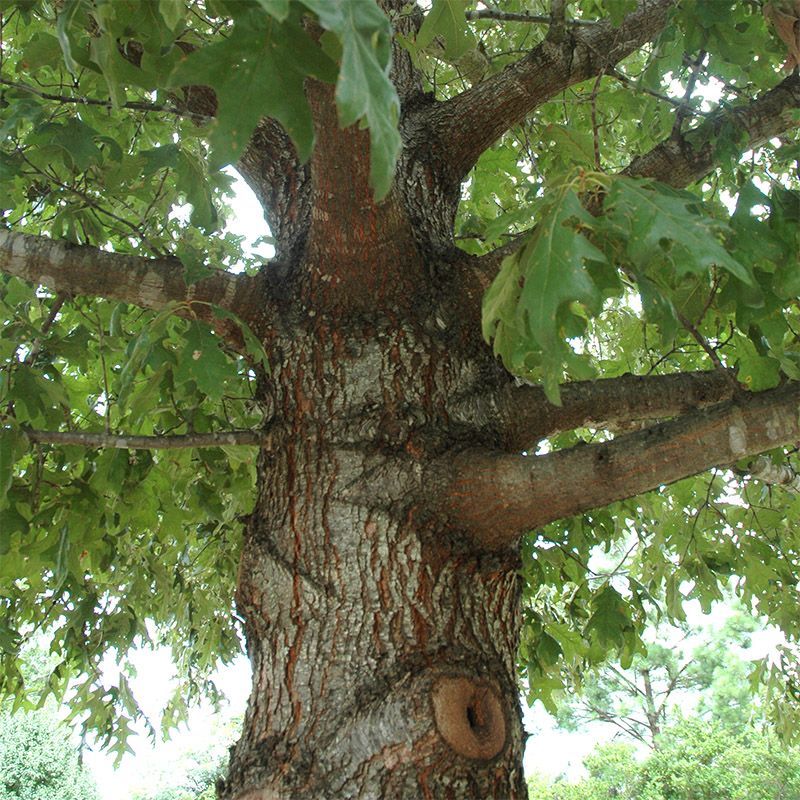
Quercus pagoda
cherrybark oak
Fagaceae
Plant Specifics
Form:
Size:
Life Span:
long-lived perennial
Flower Color:
Fruit Color:
Phenology:
Noted For:
Landscaping
Recommended Uses:
Considerations:
Fallen/falling acorns can be a maintenance issue.
Light:
Moisture Tolerance:
Usually moist, occasional inundation ---- to ---- Not wet but not extremely dry
Salt Water Flooding Tolerance:
Unknown
Salt Spray/Salty Soil Tolerance:
Low/no tolerance of salty wind or direct salt spray
Soil or Other Substrate:
Sand, Clay, Loam
Suitable to Grow In:
Ecology
Wildlife:
Host plant for the banded hairstreak, Edwards' hairstreak, gray hairstreak, white-M hairstreak Horace's duskywing and the Juvenal's duskywing butterflies.
Other insect feeders include leafhoppers, aphids, treehoppers, lace bugs, plant bugs, leaf beetles, weevils, long-horned beetles, gall wasps, walkingsticks, and moth caterpillars
- Acorns are eaten by woodpeckers, white-breasted nuthatches, blue jays, ducks, small mammals, wild turkeys, white-tailed deer and black bear
- Provides cover to birds and squirrels for resting and nesting
.
Native Habitats:

