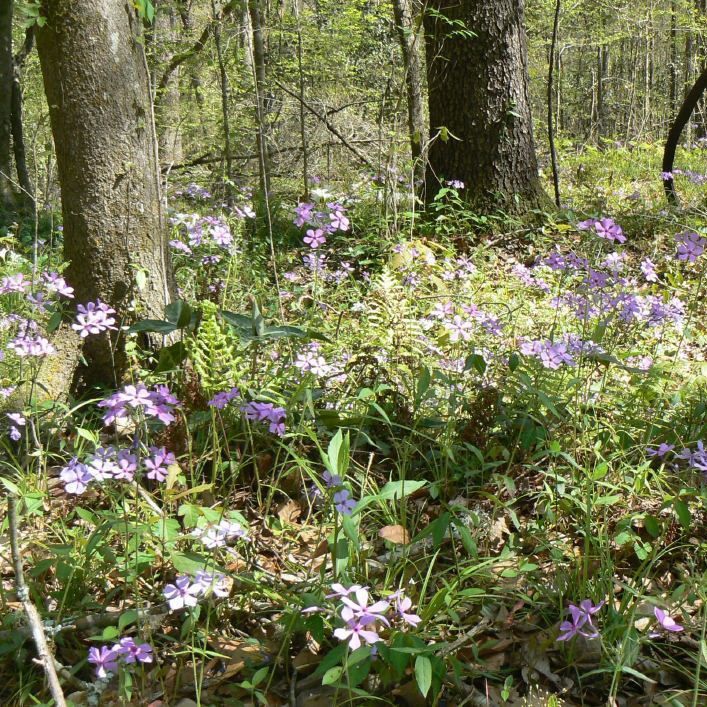
Phlox divaricata
wild blue phlox, woodland phlox
Polemoniaceae
Plant Specifics
Form:
flower
Size:
1-ft
Life Span:
long-lived perennial
Flower Color:
blue, lavender
Fruit Color:
Phenology:
semi-evergreen perennial, blooms late spring to early summer.
Noted For:
Showy Flowers
Landscaping
Recommended Uses:
Wildflower garden, typically a shade garden.
Considerations:
Light:
Full Sun, Part Sun
Moisture Tolerance:
Somewhat moist, no flooding ---- to ---- Short very dry periods
Salt Water Flooding Tolerance:
Unknown
Salt Spray/Salty Soil Tolerance:
Low/no tolerance of salty wind or direct salt spray
Soil or Other Substrate:
Sand, Loam, Lime Rock
Suitable to Grow In:
Ecology
Wildlife:
Pollinators, Butterflies
Attracts butterflies and bees -- only butterflies and long-tongued bees can reach the nectar but other insects are attracted to the flowers andn may feed on the pollen. Butterflies are the most effective pollinators. Phlox is self-incompatible and cross-pollination is required.
Native Habitats:
Rich woods, calcareous hammocks (in FL) but frequently in acid soils elsewhere.

