
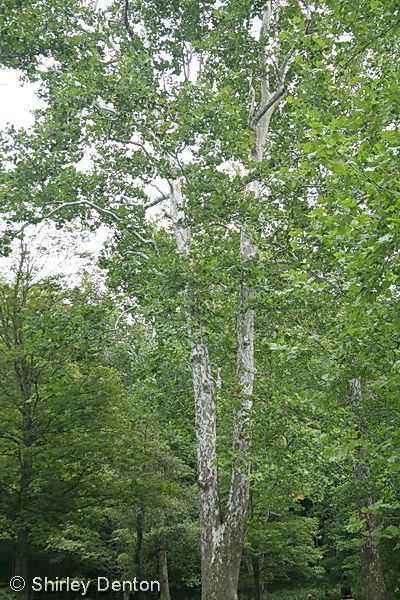
Platanus occidentalis
sycamore, American planetree
Platanaceae
Plant Specifics
Form:
tree
Size:
70-150 ft tall by and up to 100 ft wide
Life Span:
long-lived perennial
Flower Color:
Fruit Color:
brown
Phenology:
Deciduous. Blooms spring (inconspicuous). Fruits ripen late summer. Bark is very white late fall through winter. Life span - 75+ years.
Noted For:
Showy Fruits, Hurricane Wind Resistance, Fall Color, Interesting Bark
Landscaping
Recommended Uses:
Frequently used as a yard tree or as a shade tree in parks. Best used where its large size won't overwhelm the surroundings.
Considerations:
Light:
Full Sun, Part Sun
Moisture Tolerance:
Usually moist, occasional inundation ---- to ---- Not wet but not extremely dry
Salt Water Flooding Tolerance:
Unknown
Salt Spray/Salty Soil Tolerance:
Some tolerance to salty wind but not direct salt spray
Soil or Other Substrate:
Sand, Clay, Loam
Suitable to Grow In:
8A,8B,9A,9B
Ecology
Wildlife:
Native Habitats:
Stream banks, in floodplains and bottomlands.

