
Pithecellobium keyense
Florida Keys blackbead
Fabaceae (Leguminosae)
Plant Specifics
Form:
shrub
Size:
to 8 ft
Life Span:
long-lived perennial
Flower Color:
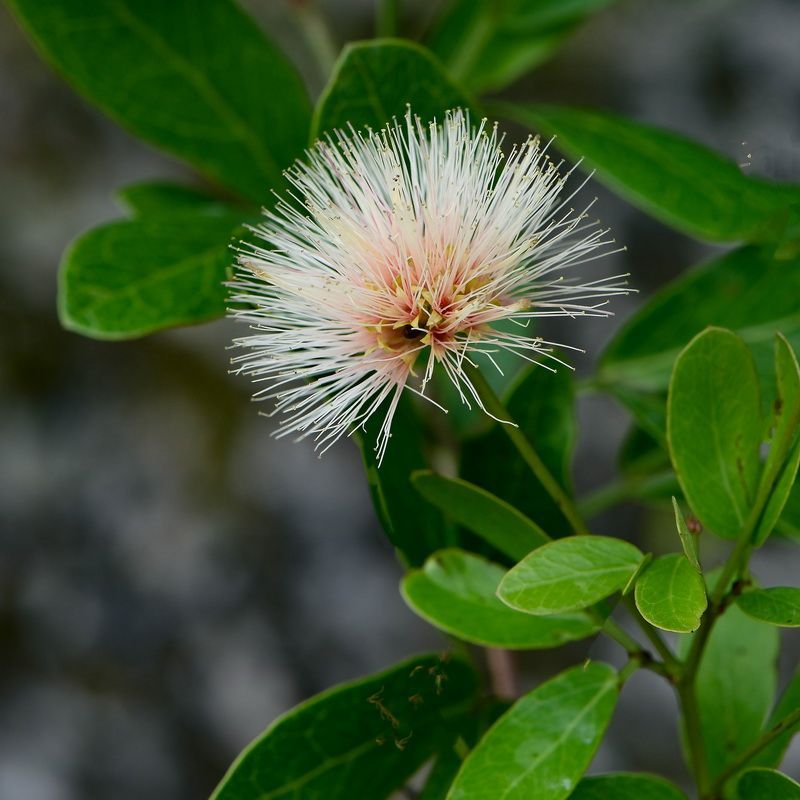
white,orange,pink
Fruit Color:
brown - red and black arils
Phenology:
Evergreen. Blooms winter-spring. Fruits mature in summer.
Noted For:
Showy Flowers
Landscaping
Recommended Uses:
Screen or hedge plant. Informal foundation shrub. Blooms profusely in late fall. Fruits are contorted and split open to reveal red seeds.
Considerations:
Light:
Full Sun, Part Sun
Moisture Tolerance:
Not wet but not extremely dry ---- to ---- Very long very dry periods
Salt Water Flooding Tolerance:
Unknown
Salt Spray/Salty Soil Tolerance:
Moderate. Tolerant of salty wind and may get some salt spray.
Soil or Other Substrate:
Sand, Lime Rock
Suitable to Grow In:
10A,10B,11
Ecology
Wildlife:
Butterflies, Caterpillars, Birds
- Larval host for cassius blue ( Leptotes cassius theonus ), large orange sulphur ( Phoebis agarithe ), and Miami blue ( Cyclargus thomasi bethunebakeri ) butterflies.
- Nectar plant for cassius blue, Florida duskywing ( Ephyriades brunneus ), Florida white ( Appias drusilla ), giant swallowtail ( Papilio cresphontes ), great southern white ( Ascia monuste ), hammock skipper ( Polygonus leo ), large orange sulphur, mangrove skipper ( Phocides pigmalion ), Miami blue, Palatka skipper ( Euphyes pilatka ), southern broken-dash ( Wallengrenia otho ), three-spotted skipper ( Cymaenes tripunctus ), twin-spot skipper ( Oligorio maculata ) and other butterflies. ( IRC )
Birds eat the fruits and the red&black arils.
Native Habitats:
Tropical/coastal hammock edges, dunes, fields. Dry sites.

