
Persea palustris
swamp bay
Lauraceae
Plant Specifics
Form:
tree
Size:
15-30 (50) ft
Life Span:
long-lived perennial
Flower Color:
white
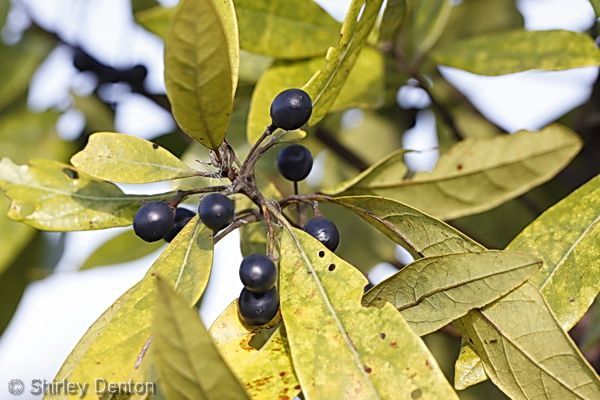
Fruit Color:
black
Phenology:
evergreen
Noted For:
Aroma/Showy Fruitsagrance
Landscaping
Recommended Uses:
If you have this plant in your landscape, retain it to supply larval food for the spicebush swallowtail and other butterflies.
Considerations:
Do not move deadwood. It will spread the disease.
Light:
Full Sun, Part Sun
Moisture Tolerance:
Usually moist, occasional inundation ---- to ---- Somewhat moist, no flooding
Salt Water Flooding Tolerance:
Unknown
Salt Spray/Salty Soil Tolerance:
Some tolerance to salty wind but not direct salt spray
Soil or Other Substrate:
Sand, Loam, Organic
Suitable to Grow In:
8A,8B,9A,9B,10A,10B
Ecology
Wildlife:
Pollinators, Caterpillars, Birds
- Larval host plant for palamedes swallowtail ( Papilio palamedes) and spicebush swallowtail ( Papilio troilus) butterflies.
- Attracts bees.
Seed eaten and dispersed by birds.
Native Habitats:
Shallow areas in swamps, hydric savannas, seep slopes including cutthroat seeps, wet flatwoods, sloughs.

