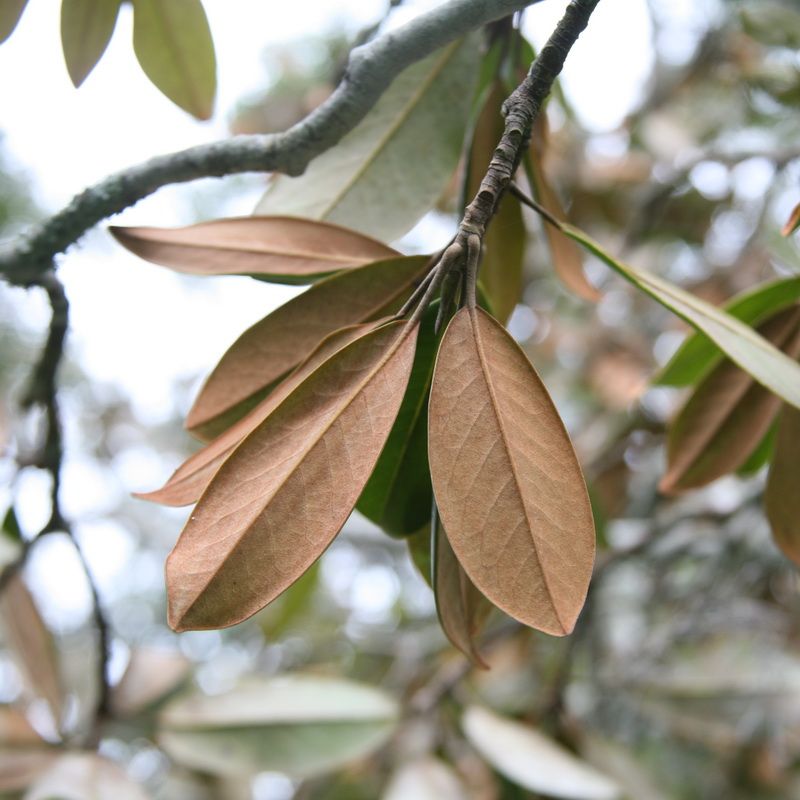
Persea humilis
scrub bay
Lauraceae
Plant Specifics
Form:
Size:
Life Span:
long-lived perennial
Flower Color:
Fruit Color:
Phenology:
Noted For:
Landscaping
Recommended Uses:
Considerations:
This small tree appears to less likely to be killed by laurel wilt than Florida's other bays.. It is likely that it is too small to attract the beetle that spreads the disease.
Light:
Moisture Tolerance:
Short very dry periods ---- to ---- Very long very dry periods
Salt Water Flooding Tolerance:
Unknown
Salt Spray/Salty Soil Tolerance:
Some tolerance to salty wind but not direct salt spray
Soil or Other Substrate:
Sand
Suitable to Grow In:
8A,8B,9A,9B,10A,10B
Ecology
Wildlife:
Larval host plant for palamedes swallowtail ( Papilio palamedes) and spicebush swallowtail ( Papilio troilus) butterflies.
Attracts bees including Colletes brimleyi, C. nudus, Augochlora pura, Augochlorella aurata, Augochloropsis metallica and Anthidiellum perplexum (Deyrup et al. 2002)
Fruits eaten and dispersed by birds.
Native Habitats:

