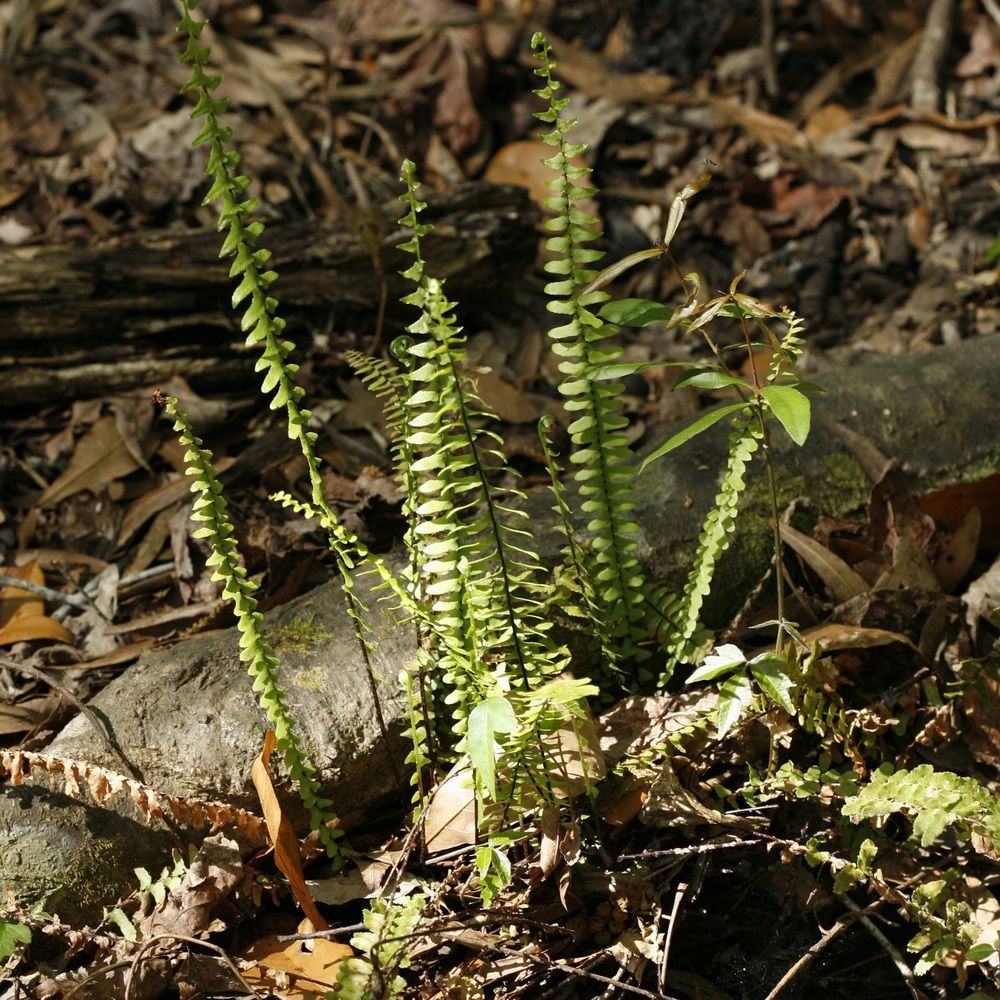

• Photo by: Shirley Denton, Suncoast Chapter FNPS
  • Photo by: Shirley Denton, Suncoast Chapter FNPS

Asplenium spp.

spleenwort

Nomenclature

Common Name:

spleenwort

Synonym(s):

Asplenium abscissum, Asplenium platyneuron, Asplenium heterochroum, Asplenium heteroresiliens, Asplenium xheteroresiliens

Genus species:

Asplenium spp.

Family:

Aspleniaceae

Plant Specifics

Form:

fern

Size:

Most 0.5 to 1 ft tall by Most 1 ft wide

Life Span:

Long-lived perennial

Flower Color:

NA

Fruit Color:

NA

Phenology:

evergreen

Noted For:

Interesting Foliage

Landscaping

Recommended Uses:

Retain and treasure if already present. Spleenworts can be used in rock gardens where they grow well on limestone boulders. Many will also do well on logs. A few (such as Asplenium abscissum) can be grown as groundcovers.

Considerations:

Text

Availability:

Text

Propagation:

Text

Light:

Text

Moisture Tolerance:

Always Flooded---------------------------------Extremely Dry

â–¡â–¡â–¡â–¡â–¡â–¡â–¡â–¡â–¡â–¡â–¡â–¡â–¡â–¡â–¡â– â– â– â– â– â– â– â– â– â– â– â– â–¡â–¡â–¡â–¡â–¡â–¡â–¡â–¡â–¡â–¡â–¡â–¡â–¡â–¡â–¡

Usually moist, occasional inundation -to- Not wet but not extremely dry

Salt Water Flooding Tolerance:

Unknown

Salt Spray/Salty Soil Tolerance:

Low/no tolerance of salty wind or direct salt spray

Soil or Other Substrate:

Sand, Loam, Lime Rock

Soil pH:

High for rockland species.

Suitable to Grow In:

9A,9B,10A,10B

Ecology

Wildlife:

Native Habitats:

Around sinkholes and on rocks. Epiphytic on logs and trees. Moist sites.

Comments:

Ethnobotany:

General Comments:

Many spleenworts are rare. Please do not harvest from the wild. Most spleenworts have very narrow ranges and narrow environmental tolerances. Don't confuse with the invasive tuberous sword fern Nephrolepis cordifolia--if the fern spreads via rhizomes and is abundant, it's probably the sword fern.