
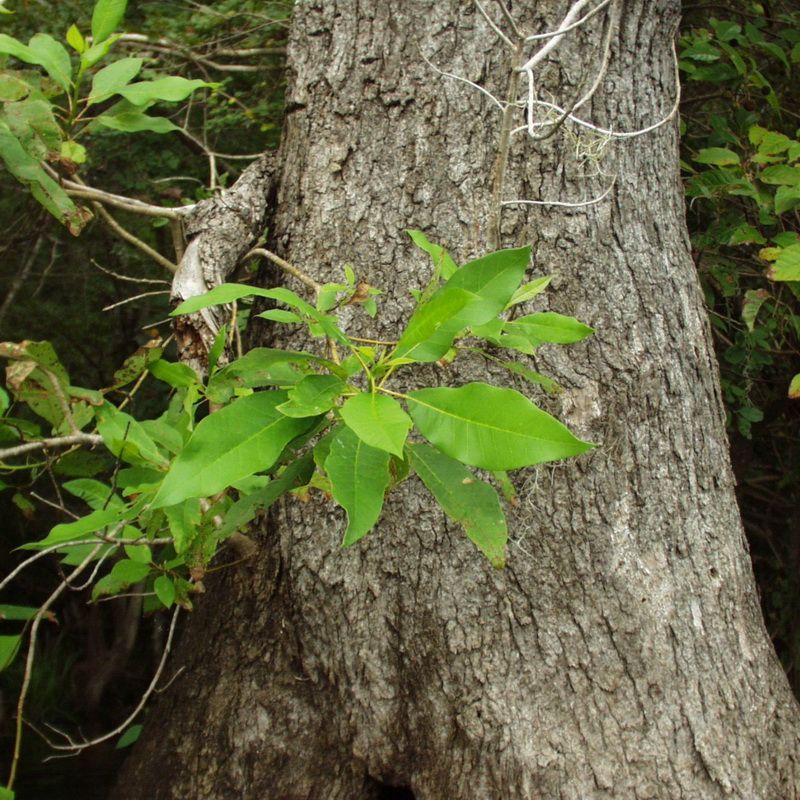
Nyssa aquatica
water tupelo
Cornaceae
Plant Specifics
Form:
tree
Size:
80-100 ft
Life Span:
long-lived perennial
Flower Color:
Fruit Color:
purple
Phenology:
deciduous
Noted For:
Fall Color
Landscaping
Recommended Uses:
Wet garden. Rain garden. Shade tree for wet areas and along wetland edges. Leaves turn yellow in fall. Slow growing.
Considerations:
Light:
Full Sun, Part Sun
Moisture Tolerance:
Stays wet ---- to ---- Somewhat moist, no flooding
Salt Water Flooding Tolerance:
Unknown
Salt Spray/Salty Soil Tolerance:
Low/no tolerance of salty wind or direct salt spray
Soil or Other Substrate:
Sand, Clay, Loam
Suitable to Grow In:
8A,8B,9A,9B,10A,10B
Ecology
Wildlife:
Pollinators, Birds, Mammals
Visited by bees and valued by commercial bee keepers as a source of exceptionally sweet honey. Also said to be wind pollinated.
Fruits eaten by birds and smal mammals.
Native Habitats:
Floodplain forests , swamps, usually in water.

