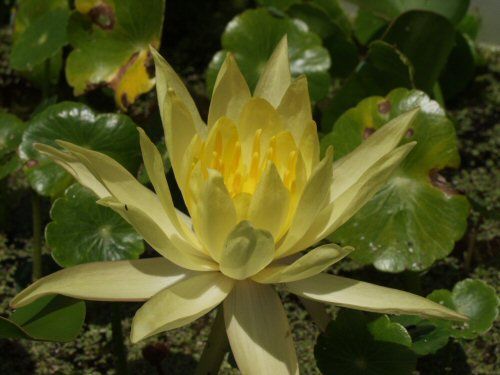
• Photo by: Shirley Denton, Suncoast Chapter FNPS

Nymphaea mexicana

yellow water-lily

Nomenclature

Common Name:

yellow water-lily

Synonym(s):

Genus species:

Nymphaea mexicana

Family:

Nymphaeaceae

Plant Specifics

Form:

aquatic

Size:

ft

Life Span:

Long-lived perennial

Flower Color:

yellow

Fruit Color:

NA

Phenology:

winter dormant

Noted For:

Showy Flowers

Landscaping

Recommended Uses:

Ponds, streams.

Considerations:

Text

Availability:

Text

Propagation:

Text

Light:

Text

Moisture Tolerance:

Always Flooded---------------------------------Extremely Dry

â– â– â– â– â– â– â–¡â–¡â–¡â–¡â–¡â–¡â–¡â–¡â–¡â–¡â–¡â–¡â–¡â–¡â–¡â–¡â–¡â–¡â–¡â–¡â–¡â–¡â–¡â–¡â–¡â–¡â–¡â–¡â–¡â–¡â–¡â–¡â–¡â–¡â–¡â–¡

1 -to- Aquatic

Salt Water Flooding Tolerance:

Unknown

Salt Spray/Salty Soil Tolerance:

Low/no tolerance of salty wind or direct salt spray

Soil or Other Substrate:

Sand, Clay, Loam

Soil pH:

Circum neutral

Suitable to Grow In:

Ecology

Wildlife:

Pollinators

Everything from flies, to beetles, and various sorts of bees have been recorded on water lilies (In Defense of Plants blog).  Given the yellow color, this plant may attract primarily bees and flies.

Native Habitats:

Aquatic. Quiet pools in spring-run streams, spring-fed lakes and ponds, still water.

Comments:

Ethnobotany:

General Comments:

The range of this plant appears to encompass most of Florida with actual occurrances having been found in streams with appropriate water chemistry (appears to like relatively neutral pH and high nutrients).  Has been planted in areas where it is not known to occur naturally including old mine ponds and reclaimation areas.  


This plant is not a nuisance in Florida.  It is, however, listed as a nuisance invasive in Australia.