

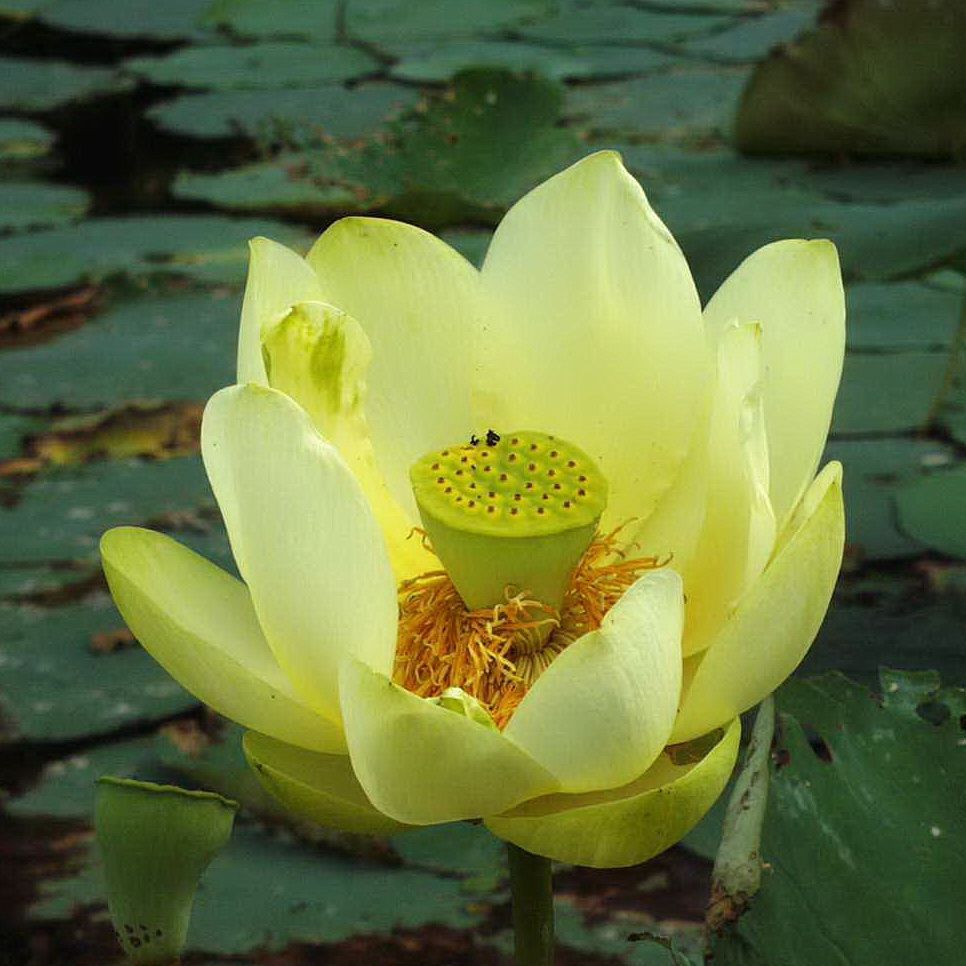
Nelumbo lutea
lotus-lily, yellow lotus, American lotus
Nelumbonaceae
Plant Specifics
Form:
Size:
Life Span:
long-lived perennial
Flower Color:
Fruit Color:
Phenology:
Noted For:
Landscaping
Recommended Uses:
Considerations:
Can be aggressive. This is not a plant for small places.
Light:
Moisture Tolerance:
Aquatic ---- to ---- Aquatic
Salt Water Flooding Tolerance:
Unknown
Salt Spray/Salty Soil Tolerance:
Low/no tolerance of salty wind or direct salt spray
Soil or Other Substrate:
Sand, Loam, Organic
Suitable to Grow In:
8A,8B,9A
Ecology
Wildlife:
The flowers are cross-pollinated by bees which collect pollen for their larvae. Two bee species that occur in Florida Lasioglossum nelumbonis and and Hylaeus nelumbonis, specialize in the pollen of the American lotus. Other visitors include flower flies (Syrphidae), shore flies (Ephydridae), and miscellaneous beetles. This latter group of floral visitors feed on pollen. ( Illinois Wildfllowers ).
The seeds of this wildflower are consumed by the Canada Goose, Mallard, Northern Shoveler, and probably other waterfowl. ( Illinois Wildfllowers ). Beaver (and likely other wetland mammals) will consume seeds and veegetative parts of the plant.
Native Habitats:

