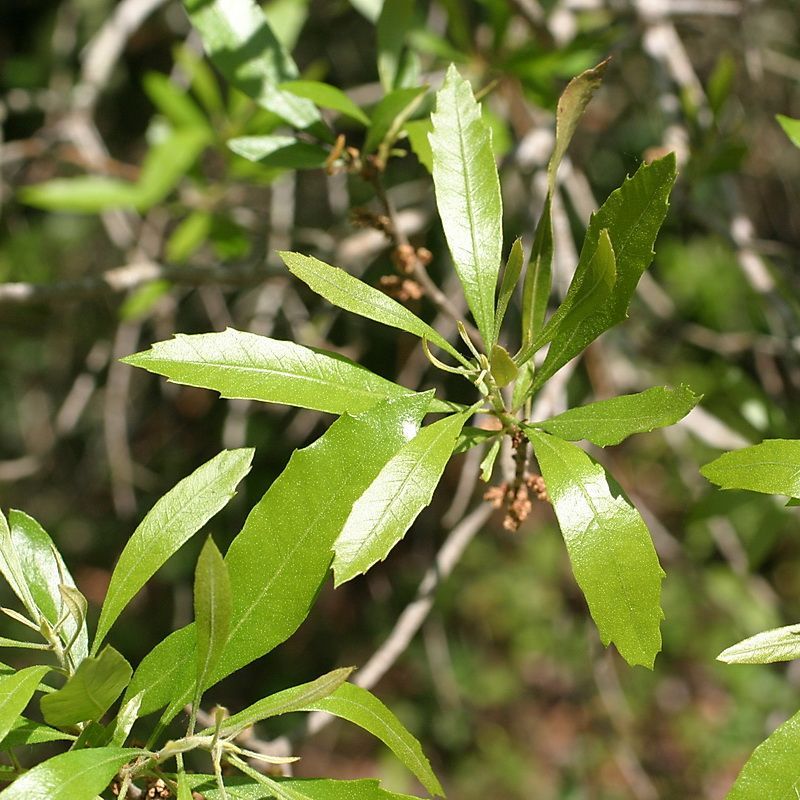
Morella cerifera
wax myrtle
Myricaceae
Plant Specifics
Form:
Size:
Life Span:
long-lived perennial
Flower Color:
Fruit Color:
Phenology:
Noted For:
Landscaping
Recommended Uses:
Good as a background or hedge plant that also attracts wildlife. Rain gardens or bioswales.
Considerations:
It is flammable, so plant away from buildings in fire-prone areas. It fixes nitrogen with its roots like a legume, so it tolerates poor soils.
Light:
Moisture Tolerance:
Stays wet ---- to ---- Somewhat long very dry periods
Salt Water Flooding Tolerance:
Unknown
Salt Spray/Salty Soil Tolerance:
Moderate. Tolerant of salty wind and may get some salt spray.
Soil or Other Substrate:
Sand, Loam, Lime Rock
Suitable to Grow In:
8A,8B,9A,9B,10A,10B,11
Ecology
Wildlife:
Larval host for banded hairstreak ( Satyrium calanus ) and red-banded hairstreak ( Calycopis cecrops )butterflies.
Good wildlife cover.
Seeds eaten by birds.
Native Habitats:

