

Myrcianthes fragrans
Simpson's stopper, twinberry
Myrtaceae
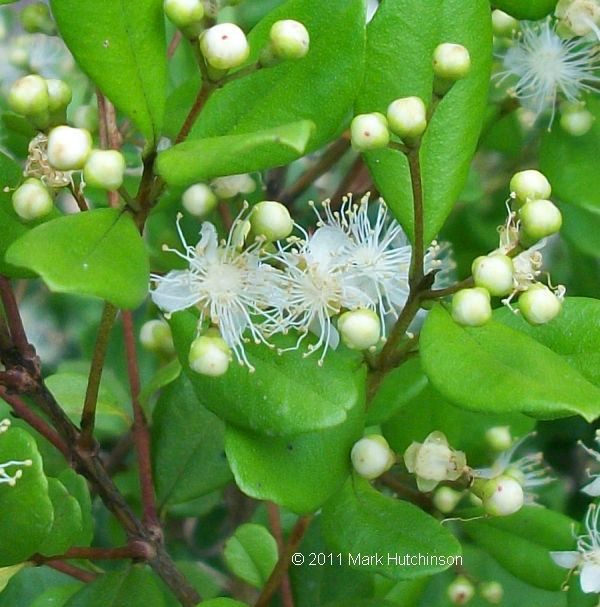
Plant Specifics
Form:
shrub
Size:
5-20 ft tall by 3-15 ft wide with the potential to form small clones.
Life Span:
long-lived perennial
Flower Color:
white
Fruit Color:
orange
Phenology:
Evergreen. Flowers sporadically throughout the year with best bloom in spring and early summer.
Noted For:
Showy Flowers, Showy Fruits, Aroma/Showy Fruitsagrance, Hurricane Wind Resistance, Interesting Bark
Landscaping
Recommended Uses:
Specimen plant. Roadsides, parking lot edges, and medians. Smaller forms can make good foundation screens.
Considerations:
Both suckers and seedlings will appear.
Light:
Full Sun, Part Sun
Moisture Tolerance:
Somewhat moist, no flooding ---- to ---- Very long very dry periods
Salt Water Flooding Tolerance:
Unknown
Salt Spray/Salty Soil Tolerance:
Some tolerance to salty wind but not direct salt spray
Soil or Other Substrate:
Sand, Lime Rock
Suitable to Grow In:
10A,10B,11
Ecology
Wildlife:
Pollinators, Butterflies, Birds
Attracts bees and butterflies.
Birds eat the fruits.
Native Habitats:
Tropical rockland hammock, coastal hammock.

