

Manilkara jaimiqui subsp. emarginata
wild dilly
Sapotaceae
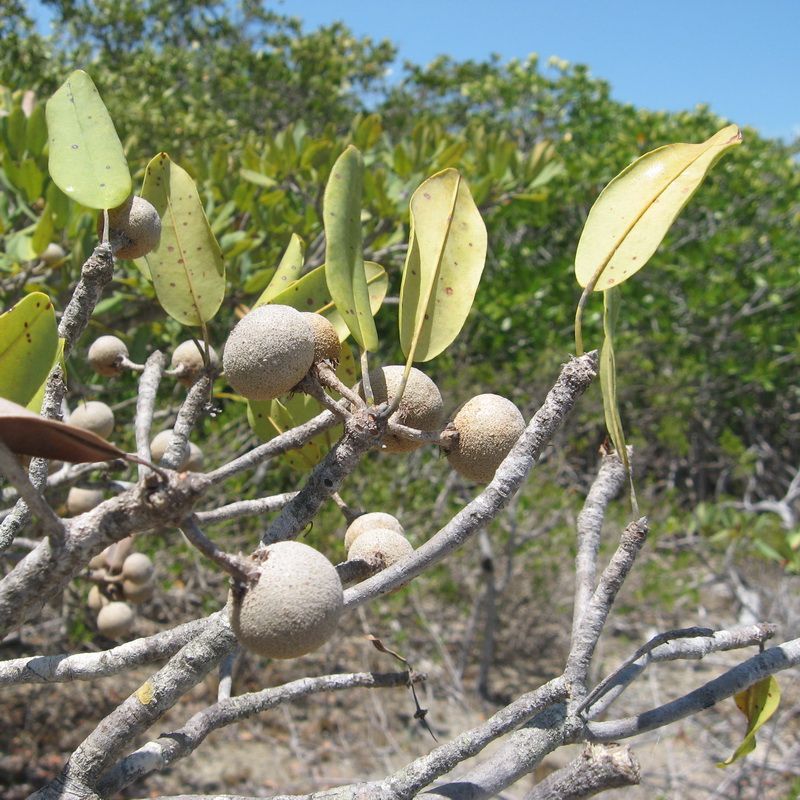
Plant Specifics
Form:
tree
Size:
10-15 ft
Life Span:
long-lived perennial
Flower Color:
white to yellow
Fruit Color:
brown
Phenology:
Evergreen. Blooms throughout the year (inconspicuous).
Noted For:
Interesting Foliage
Landscaping
Recommended Uses:
Screen or buffer plant. Specimen shrub.
Considerations:
Light:
Full Sun, Part Sun
Moisture Tolerance:
Usually moist, occasional inundation ---- to ---- Short very dry periods
Salt Water Flooding Tolerance:
Unknown
Salt Spray/Salty Soil Tolerance:
Low/no tolerance of salty wind or direct salt spray
Soil or Other Substrate:
Sand, Lime Rock
Suitable to Grow In:
10A,10B,11
Ecology
Wildlife:
Birds, Mammals
Provides food and cover for birds small mammals.
Native Habitats:
Coastal hammocks. Pine rocklands.

