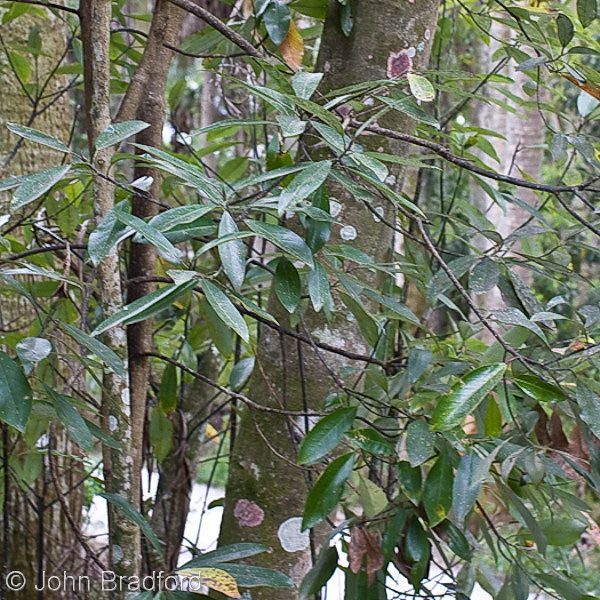
Magnolia virginiana
sweet-bay magnolia
Magnoliaceae
Plant Specifics
Form:
Size:
Life Span:
long-lived perennial
Flower Color:
Fruit Color:
Phenology:
Noted For:
Landscaping
Recommended Uses:
Considerations:
Light:
Moisture Tolerance:
Stays wet ---- to ---- Somewhat moist, no flooding
Salt Water Flooding Tolerance:
Unknown
Salt Spray/Salty Soil Tolerance:
Low/no tolerance of salty wind or direct salt spray
Soil or Other Substrate:
Sand, Loam, Organic
Suitable to Grow In:
8A,8B,9A,9B,10A,10B
Ecology
Wildlife:
Larval host plant for Eastern tiger swallowtail ( Pterourous glaucus ).
Larval host for the southern tiger swallowtail. This butterfly is restricted to Magnolia virginiana.
Beetles are the primary pollinators. The flowers have a hardened carpel to avoid damage by their gnawing mandibles as the feed. The beetles are after the protein-rich pollen. Because the beetles are interesting in pollen and pollen alone, the flowers mature in a way that ensures cross pollination. The male parts mature first and offer said pollen. The female parts of the flower are second to mature. They produce no reward for the beetles but are instead believed to mimic the male parts, ensuring that the beetles will spend some time exploring and thus effectively pollinating the flowers ( In Defense of Plants blog).
Seeds are eaten by woodpeckers, kingbirds, red-eyed vireos, mockingbirds, robins, thrushes, crows, cardinals, squirrels, mice among others.
Deer browse leaves and twigs.
Fruits eaten by gray squirrels, mice, turkey and quail as well as a variety of smaller birds including vireos, towhees, blue jays, woodpeckers, kingbirds, mockingbirds, robins, thrushes, crows, cardinals, squirrels, mice among others
Native Habitats:

