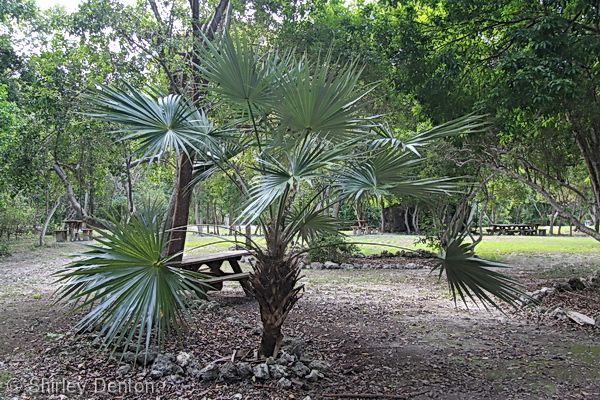
Leucothrinax morrisii
brittle thatch palm, Key thatch palm
Arecaceae (Palmae)
Plant Specifics
Form:
palm
Size:
6-15 ft tall by 5-10 ft wide
Life Span:
long-lived perennial
Flower Color:
white
Fruit Color:
white
Phenology:
Evergreen, slow growing. Blooms all year with spring maximum.
Noted For:
Aroma/Showy Fruitsagrance, Hurricane Wind Resistance, Interesting Foliage
Landscaping
Recommended Uses:
Specimen tree, understory tree. It grows slowly.
Considerations:
Light:
Full Sun, Part Sun
Moisture Tolerance:
Somewhat moist, no flooding ---- to ---- Very long very dry periods
Salt Water Flooding Tolerance:
Unknown
Salt Spray/Salty Soil Tolerance:
High. Can tolerate significant and ongoing amounts of salt.
Soil or Other Substrate:
Sand, Lime Rock
Suitable to Grow In:
10A,10B,11
Ecology
Wildlife:
Caterpillars, Birds
Larval host plant for monk skipper ( Asbolis capucinus ) butterflies.
Used as a bird nesting area and food source.
Native Habitats:
Coastal strand, maritime hammock, pine rockland, rockland hammock, coastal berm

