Lantana depressa var. depressa
gold lantana
Verbenaceae
Plant Specifics
Form:
shrub
Size:
2 ft tall by 5 ft wide
Life Span:
long-lived perennial
Flower Color:
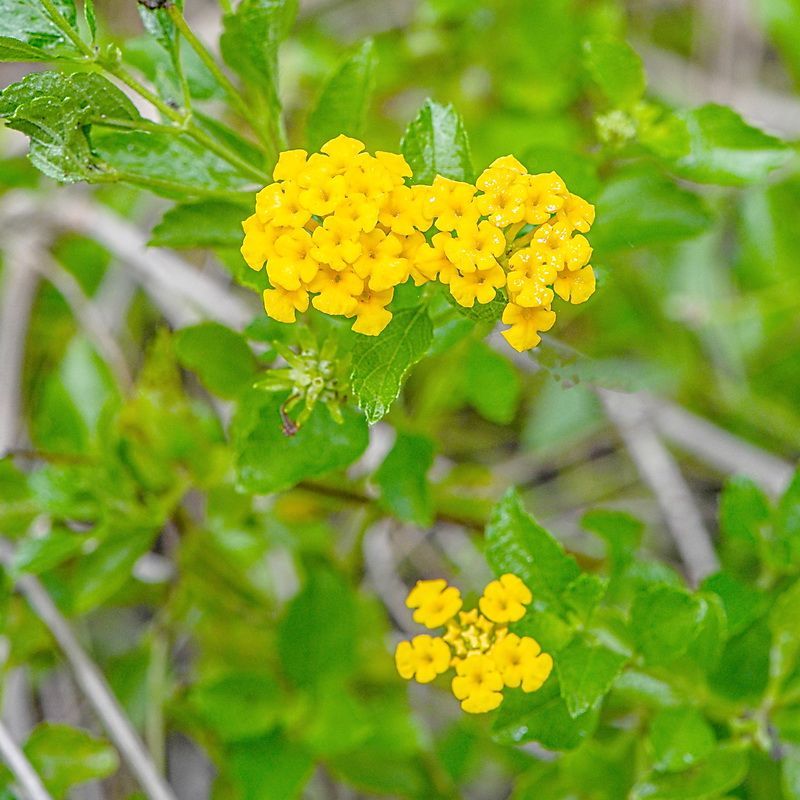
yellow
Fruit Color:
purple
Phenology:
evergreen
Noted For:
Showy Flowers
Landscaping
Recommended Uses:
Small, low-growing border plant, specimen plant in a flower garden. Fairly slow growing. Flowers range from bright yellow to white with a yellow center -- never becoming multicolored with age.
Considerations:
Light:
Full Sun
Moisture Tolerance:
Not wet but not extremely dry ---- to ---- Very long very dry periods
Salt Water Flooding Tolerance:
Unknown
Salt Spray/Salty Soil Tolerance:
Moderate. Tolerant of salty wind and may get some salt spray.
Soil or Other Substrate:
Sand, Lime Rock
Suitable to Grow In:
10A,10B,11
Ecology
Wildlife:
Pollinators, Butterflies, Birds
May be pollinated by butterflies during the day and by moths at night (Osorio 2012). Also visited by bees.
Birds eat the fruits and spread the seeds.
Native Habitats:
Pine rockland. On limestone. Vacant lots.

