
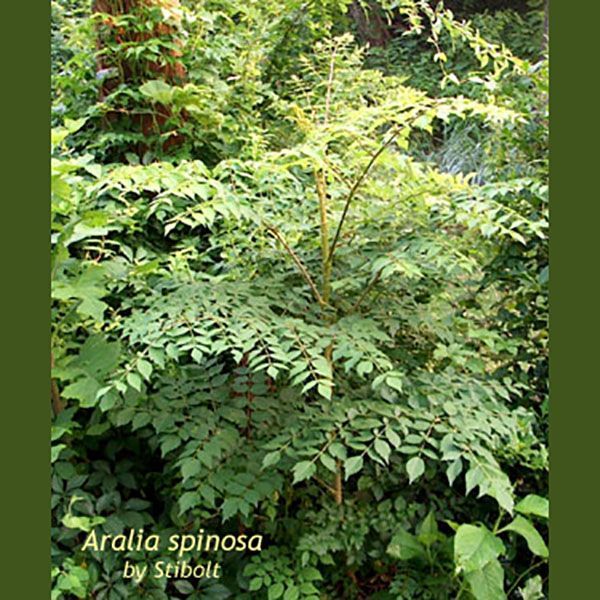
Aralia spinosa
devil's walkingstick
Araliaceae
Plant Specifics
Form:
Size:
Life Span:
long-lived perennial
Flower Color:
Fruit Color:
Phenology:
Noted For:
Landscaping
Recommended Uses:
Considerations:
When its huge triply compound leaves are shed in the fall, only the main thorny stem is left standing through the winter months--hence the name devil's walking stick. In the right situation, it can sucker aggressively.
Light:
Moisture Tolerance:
Somewhat moist, no flooding ---- to ---- Not wet but not extremely dry
Salt Water Flooding Tolerance:
Unknown
Salt Spray/Salty Soil Tolerance:
Moderate. Tolerant of salty wind and may get some salt spray.
Soil or Other Substrate:
Sand
Suitable to Grow In:
8A,8B,9A,9B
Ecology
Wildlife:
Attracts butterflies and bees. Documented bee species include Colletes mandibularis, Hylaeus confluens, Augochlora pura, Coelioxys dolichos, C. texana, Megachile mendica, M. xylocopoides , and Epeolus zonatus (Deyrup et al. 2002).
Birds and small mammals consume the fruit. Birds include nuthatches, orioles, chickadees, titmice, and warblers.
Native Habitats:

