

Halesia diptera
twowing silverbells
Styracaceae
Plant Specifics
Form:
tree
Size:
30 ft tall by 20 ft wide
Life Span:
long-lived perennial
Flower Color:
white
Fruit Color:
Phenology:
deciduous
Noted For:
Showy Flowers, Fall Color
Landscaping
Recommended Uses:
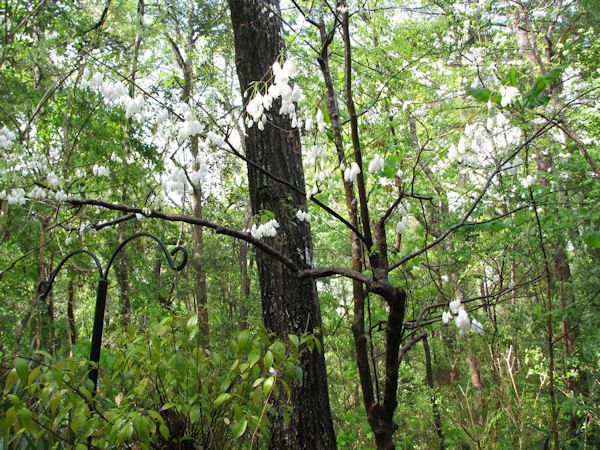
Use as a specimen plant or as an understory in a mixed hardwood forest setting. This tree blooms in early spring before the leaves come out.
Considerations:
Light:
Full Sun, Part Sun, Shade
Moisture Tolerance:
Usually moist, occasional inundation ---- to ---- Somewhat long very dry periods
Salt Water Flooding Tolerance:
Unknown
Salt Spray/Salty Soil Tolerance:
Low/no tolerance of salty wind or direct salt spray
Soil or Other Substrate:
Sand
Suitable to Grow In:
8A,8B,9A
Ecology
Wildlife:
Pollinators, Hummingbirds, Birds
- Larval plant for several moth species.
- Primary pollinators are bees.
Hummingbirds and cardinals are known to be interested in the nectar. Squirrels may eat the fruits.
Native Habitats:
Dry-moist sites. Upland hardwood forests on fertile mesic slopes and ravines, hammocks, floodplain forests, slope forests, seep slopes, floodplains with short-term inundation.

