

Gleditsia triacanthos
honey locust
Fabaceae (Leguminosae)
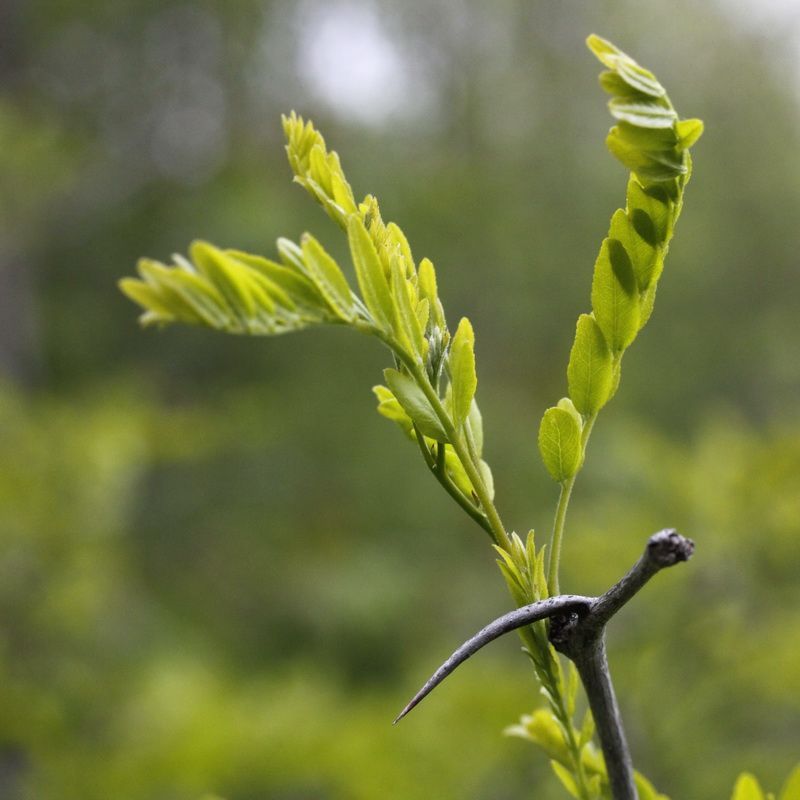
Plant Specifics
Form:
Size:
Life Span:
long-lived perennial
Flower Color:
Fruit Color:
Phenology:
Noted For:
Landscaping
Recommended Uses:
Considerations:
Very sharp thorns. Tree is short-lived in the southern parts of its range (includes Florida).
Light:
Moisture Tolerance:
Usually moist, occasional inundation ---- to ---- Not wet but not extremely dry
Salt Water Flooding Tolerance:
Unknown
Salt Spray/Salty Soil Tolerance:
Moderate. Tolerant of salty wind and may get some salt spray.
Soil or Other Substrate:
Sand, Clay, Loam
Suitable to Grow In:
8A,8B
Ecology
Wildlife:
Larval host for Epargyreus clarus (Silver-Spotted Skipper) and several moths including Catocala innubens (The Betrothed), Catocala minuta (Little Underwing), and Spiloloma lunilinea (Moon-Lined Moth).
Pollinated primarily by small bees and flies.
Other insect feeders include the treehoppers, leafhoppers, some bugs, and some beetles.
The seed pods have edible sweet pulp and are eaten by deer, opossums, squirrels, crows, starlings, and quail.
Native Habitats:

