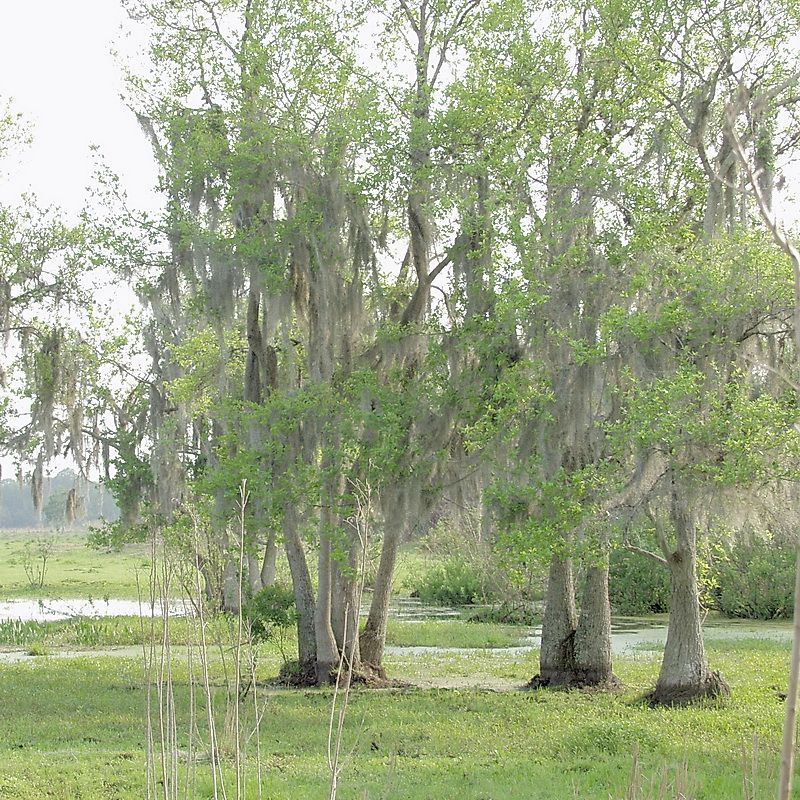
• Photo by: Shirley Denton, Suncoast Chapter FNPS
  • Photo by: Shirley Denton, Suncoast Chapter FNPS
  • Photo by: John Bradford, Martin County Chapter FNPS
  • Photo by: John Bradford, Martin County Chapter FNPS
  • Photo by: Shirley Denton, Suncoast Chapter FNPS

Fraxinus caroliniana

pop ash, water ash

Nomenclature

Common Name:

pop ash, water ash

Synonym(s):

Genus species:

Fraxinus caroliniana

Family:

Oleaceae

Plant Specifics

Form:

tree

Size:

30-60 ft tall by 10 ft wide

Life Span:

Long-lived perennial

Flower Color:

NA

Fruit Color:

brown

Phenology:

Deciduous, blooms in early spring, fruits ripen summer-fall. Dispersal is by wind and water. Lives about 50 yrs (Nelson 2003).

Noted For:

Interesting Foliage

Landscaping

Recommended Uses:

Use in wet settings to improve the aesthetics of drainage ponds and swales. This is a good plant to retain in natural wetlands as it is frequently used for roosting by wading birds. Often multi-trunked.

Considerations:

Text

Availability:

Text

Propagation:

Text

Light:

Text

Moisture Tolerance:

Always Flooded---------------------------------Extremely Dry

â–¡â–¡â–¡â– â– â– â– â– â– â– â– â– â– â– â– â– â– â– â– â– â– â– â– â– â–¡â–¡â–¡â–¡â–¡â–¡â–¡â–¡â–¡â–¡â–¡â–¡â–¡â–¡â–¡â–¡â–¡â–¡

Aquatic -to- Somewhat moist, no flooding

Salt Water Flooding Tolerance:

Unknown

Salt Spray/Salty Soil Tolerance:

Low/no tolerance of salty wind or direct salt spray

Soil or Other Substrate:

Sand, Clay, Loam, Organic

Soil pH:

acidic to neutral

Suitable to Grow In:

8A,8B,9A,9B,10A,10B

Ecology

Wildlife:

Caterpillars, Birds

Larval host for eastern tiger swallowtail ( Papilio glaucus ), mourning cloak ( Nymphalis antiopa ) and viceroy ( Limenitis archippus ).

Rodents and birds consume seed. 

Native Habitats:

Wet sites. Floodplains, swamps. Typically in areas with prolonged, deep inundation.

Comments:

Ethnobotany:

General Comments:

The Emerald Ash Borer (Agrilus planipennis) is a very destructive wood-boring beetle native to Asia. It was discovered in North America in July 2002, and has become established in Michigan, New York, Ohio and Ontario (Canada). Millions of ash trees have been killed in the northeastern US. Although the borer has not been detected in Florida (Dec. 2011), the presence of ash trees and the ongoing movement of wood, trees and cargo into the state make Florida an area where the beetle could potentially become established. Your help is needed to detect possible infestations so they can be quickly eradicated...if you see it, contact the Florida Division of Forestry.