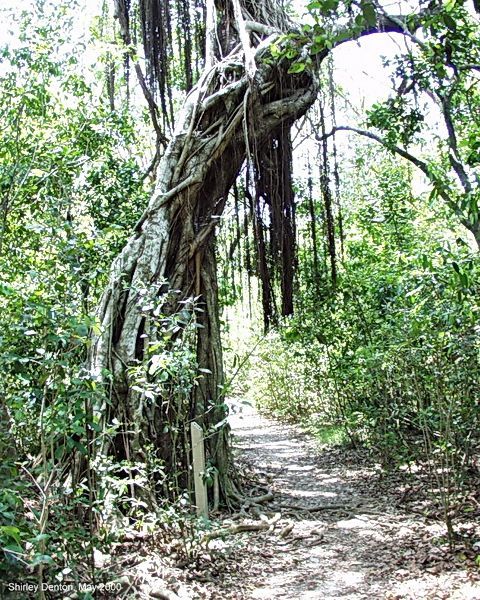

• Photo by: Shirley Denton, Suncoast Chapter FNPS
  • Photo by: Shirley Denton, Suncoast Chapter FNPS
  • Photo by: John Bradford, Martin County Chapter FNPS
  • Photo by: John Bradford, Martin County Chapter FNPS
  • Photo by: John Bradford, Martin County Chapter FNPS

Ficus aurea

strangler fig

Nomenclature

Common Name:

strangler fig

Synonym(s):

Genus species:

Ficus aurea

Family:

Moraceae

Plant Specifics

Form:

tree

Size:

40-60 (75) ft tall by 20-60 ft wide

Life Span:

Long-lived perennial

Flower Color:

NA

Fruit Color:

yellow,red,brown

Phenology:

Evergreen. Blooms and fruits throughout the year but fruits most abundant in spring.

Noted For:

Showy Fruits, Interesting Foliage, Interesting Bark

Landscaping

Recommended Uses:

This is a large tree best used in settings where its form can be appreciated. It is both a specimen tree and and shade tree.

Considerations:

Text

Availability:

Text

Propagation:

Text

Light:

Text

Moisture Tolerance:

Always Flooded---------------------------------Extremely Dry

â–¡â–¡â–¡â–¡â–¡â–¡â–¡â–¡â–¡â–¡â–¡â–¡â–¡â–¡â–¡â– â– â– â– â– â– â– â– â– â– â– â– â– â– â– â–¡â–¡â–¡â–¡â–¡â–¡â–¡â–¡â–¡â–¡â–¡â–¡

Usually moist, occasional inundation -to- Not wet but not extremely dry

Salt Water Flooding Tolerance:

Unknown

Salt Spray/Salty Soil Tolerance:

Some tolerance to salty wind but not direct salt spray

Soil or Other Substrate:

Sand, Loam, Lime Rock, Organic

Soil pH:

neutral to alkaline

Suitable to Grow In:

10A,10B,11

Ecology

Wildlife:

Caterpillars, Birds, Mammals

Larval host for ruddy daggerwing ( Marpesia petreus ) and Antillean daggerwing ( Marpesia eleuchea ) butterflies.


It is pollinated by a host-specific wasp ( Pegascapus jimenezi ) inside the fig.

Birds and small mammals consume fruit and often deposit seeds high in the canopy. 

Native Habitats:

Moist-wet sites to dry sites and on shallow soils over limestone. Tropical hammocks, swamps. May be epiphytic or have aerial roots that may wrap around the trunks of other trees and eventually form secondary trunks.

Comments:

Ethnobotany:

General Comments: