

Erythronium umbilicatum
dimpled troutlily
Liliaceae
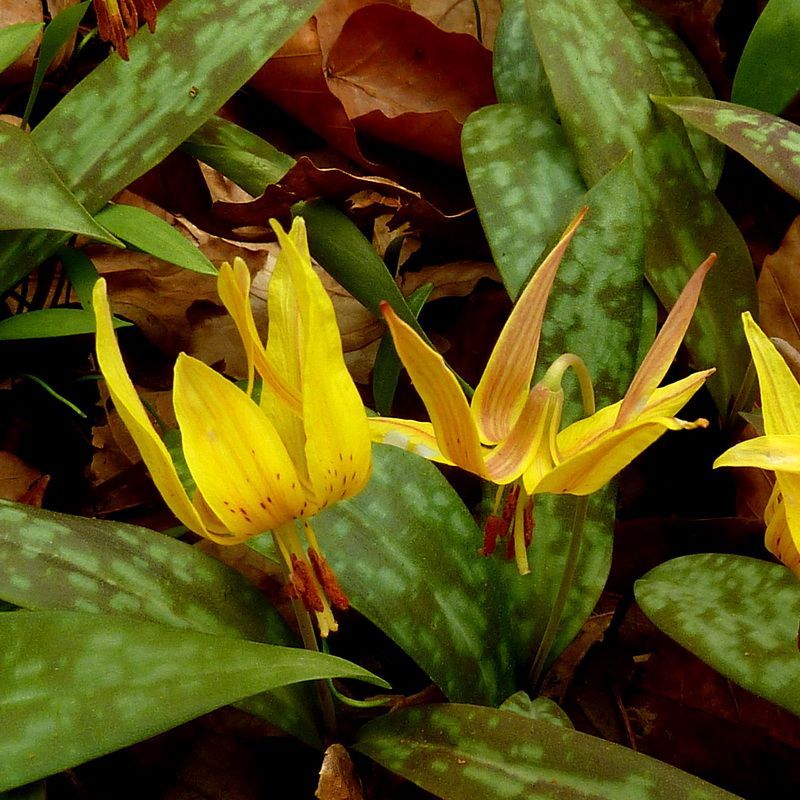
Plant Specifics
Form:
flower
Size:
0.25 - 0.5 ft tall by 0.5 ft wide
Life Span:
long-lived perennial
Flower Color:
yellow
Fruit Color:
Phenology:
winter dormant
Noted For:
Showy Flowers
Landscaping
Recommended Uses:
Early spring wildflower. Can be planted as a seasonal groundcover in a shady location.
Considerations:
Light:
Part Sun, Shade
Moisture Tolerance:
Usually moist, occasional inundation ---- to ---- Not wet but not extremely dry
Salt Water Flooding Tolerance:
Unknown
Salt Spray/Salty Soil Tolerance:
Low/no tolerance of salty wind or direct salt spray
Soil or Other Substrate:
Sand, Clay, Loam
Suitable to Grow In:
Ecology
Wildlife:
Pollinators
Supports early pollinators, especially bees ( https://gnps.org/plants/dimpled-trout-lily-erythronium-umbilicatum/ ).
Native Habitats:
Swamps, floodplains, wet flatwoods, bogs, savannas.

