

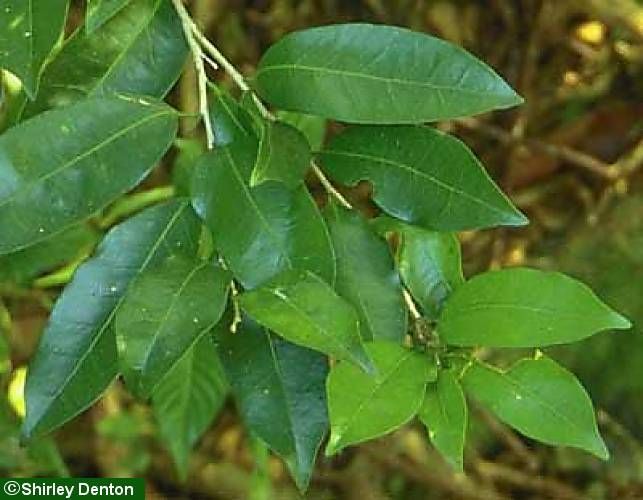
Drypetes diversifolia
milkbark, whitewood
Putranjivacaea
Plant Specifics
Form:
tree
Size:
20-30 (45) ft
Life Span:
long-lived perennial
Flower Color:
Fruit Color:
white
Phenology:
Noted For:
Interesting Bark
Landscaping
Recommended Uses:
Shade tree. Can be used as a specimen tree for its light colored bark. Slow growing.
Considerations:
Light:
Part Sun, Shade
Moisture Tolerance:
Somewhat moist, no flooding ---- to ---- Short very dry periods
Salt Water Flooding Tolerance:
Unknown
Salt Spray/Salty Soil Tolerance:
Low/no tolerance of salty wind or direct salt spray
Soil or Other Substrate:
Sand, Lime Rock
Suitable to Grow In:
10A,10B,11
Ecology
Wildlife:
Caterpillars, Birds, Mammals
Larval host for Florida white ( Appias drusilla ) butterfly.
Birds and other wildlife consume fruit.
Native Habitats:
Rockland hammock.

