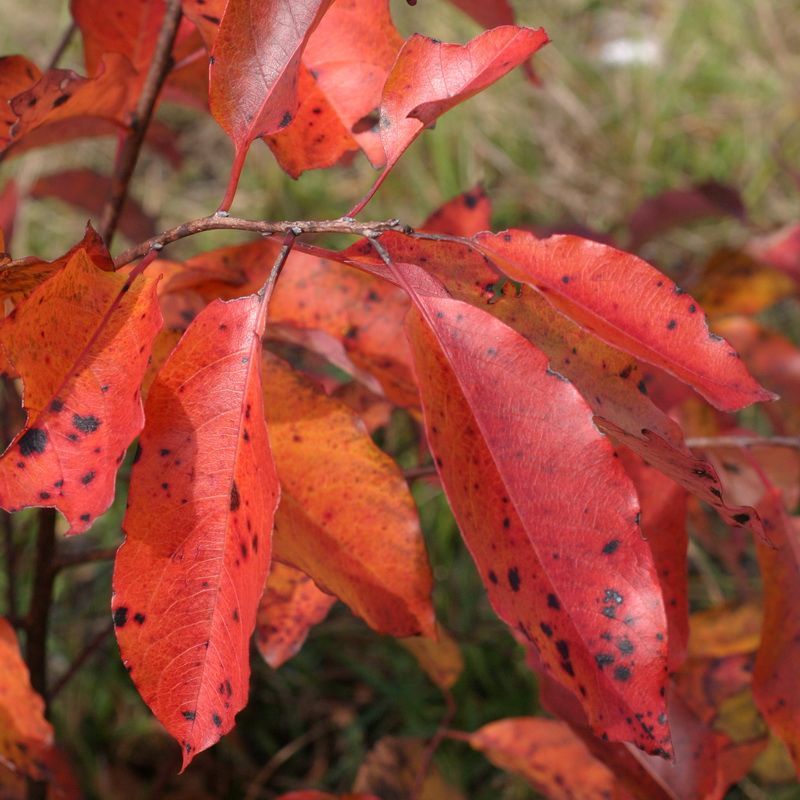

• Photo by: Shirley Denton, Suncoast Chapter FNPS
  • Photo by: Shirley Denton, Suncoast Chapter FNPS
  • Photo by: John Bradford, Martin County Chapter FNPS
  • Photo by: John Bradford, Martin County Chapter FNPS
  • Photo by: John Bradford, Martin County Chapter FNPS
  • Photo by: Shirley Denton, Suncoast Chapter FNPS

Diospyros virginiana

persimmon

Nomenclature

Common Name:

persimmon

Synonym(s):

Genus species:

Diospyros virginiana

Family:

Ebenaceae

Plant Specifics

Form:

tree

Size:

35 - 60 (100) ft tall by 15 - 35 ft wide

Life Span:

Long-lived perennial

Flower Color:

white

Fruit Color:

orange

Phenology:

Deciduous. Blooms spring but inconspicuous. Fruit ripens in fall. May live up to 100+ yrs.

Noted For:

Showy Fruits, Hurricane Wind Resistance, Fall Color

Landscaping

Recommended Uses:

Typically grown for its fruit. Plant in full sun. Also useful as an early successional tree in old field restoration.

Considerations:

Text

Availability:

Text

Propagation:

Text

Light:

Text

Moisture Tolerance:

Always Flooded---------------------------------Extremely Dry

â–¡â–¡â–¡â–¡â–¡â–¡â–¡â–¡â–¡â–¡â–¡â–¡â– â– â– â– â– â– â– â– â– â– â– â– â– â– â– â– â– â– â– â– â– â– â– â– â–¡â–¡â–¡â–¡â–¡â–¡

Usually moist, occasional inundation -to- Somewhat long very dry periods

Salt Water Flooding Tolerance:

Unknown

Salt Spray/Salty Soil Tolerance:

Moderate. Tolerant of salty wind and may get some salt spray.

Soil or Other Substrate:

Sand, Clay, Loam

Soil pH:

adaptable

Suitable to Grow In:

8A,8B,9A,9B,10A

Ecology

Wildlife:

Pollinators, Birds, Mammals

Larval host for royal walnut moth ( Citheronia regalis ), pecan carpenterworm moth ( Cossula magnifica ), pin-striped slug moth ( Monoleuca semifascia ), Wittfeld's forester ( Alypia wittfeldii ), hag moth ( Phobetron pithecium ), and luna moth ( Actias luna ).


Flowers are insect pollinated.

Fruits are used by a broad array of small mammals and some birds. 

Native Habitats:

Dry-moist-wet sites. Disturbed sites, wetland edges, old fields, sandhill.

Comments:

Ethnobotany:

Fruits are edible after ripening. Prior to being ripe, they are extremely astringent. Native Americans used the fruits to make bread, and also used them dried. Cooking oil can be extracted from the seeds. Confederate soldiers boiled persimmon seeds as a coffee substitute during the Civil War.

General Comments:

Persimmon wood is very hard and nearly black--it's in the ebony family.