Amyris elemifera
torchwood, sea torchwood
Rutaceae
Plant Specifics
Form:
tree
Size:
15-20 (40) ft
Life Span:
long-lived perennial
Flower Color:
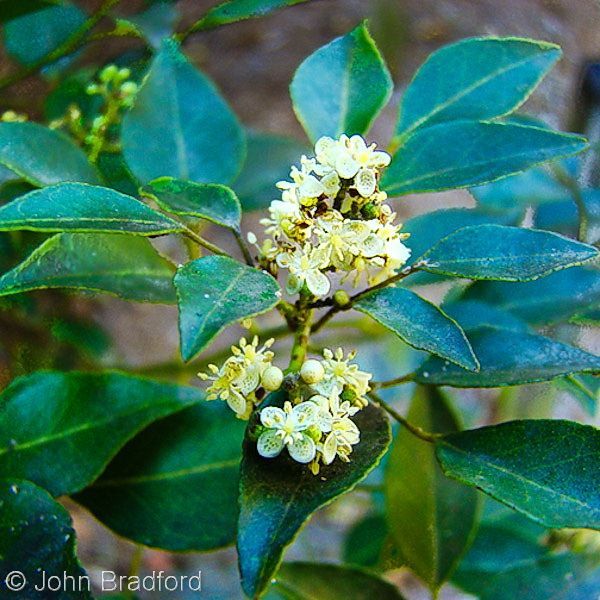
white
Fruit Color:
purple,black
Phenology:
Evergreen. Blooms spring-fall.
Noted For:
Showy Fruits, Aroma/Showy Fruitsagrance, Interesting Foliage
Landscaping
Recommended Uses:
Noted for its 3-parted glossy leaves. Can be used as as a specimen plant, screen, or possibly a hedge.
Considerations:
Light:
Full Sun, Part Sun
Moisture Tolerance:
Usually moist, occasional inundation ---- to ---- Very long very dry periods
Salt Water Flooding Tolerance:
Unknown
Salt Spray/Salty Soil Tolerance:
Some tolerance to salty wind but not direct salt spray
Soil or Other Substrate:
Suitable to Grow In:
9B,10A,10B,11
Ecology
Wildlife:
Caterpillars, Birds, Mammals
Larval host plant for Bahamian swallowtail ( Heraclides andraemon ), giant swallowtail ( Papilio cresphontes ) and Schaus' swallowtail ( Heraclides aristodemus ) butterflies.
The fruit is eaten by birds and small mammals. Also used for cover or nesting by birds.
Native Habitats:
Coastal uplands

