
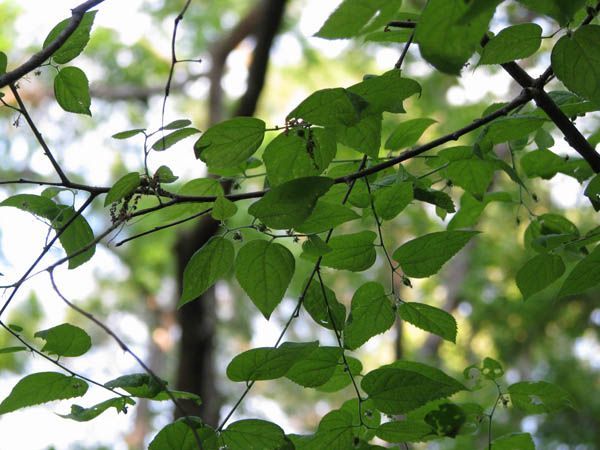
Celtis occidentalis
Hackberry
Celtidaceae
Plant Specifics
Form:
Size:
Life Span:
long-lived perennial
Flower Color:
Fruit Color:
Phenology:
Noted For:
Landscaping
Recommended Uses:
Considerations:
Has a shallow root system that may prevent plants from growing under it.
Light:
Moisture Tolerance:
Somewhat moist, no flooding ---- to ---- Somewhat long very dry periods
Salt Water Flooding Tolerance:
Unknown
Salt Spray/Salty Soil Tolerance:
Low/no tolerance of salty wind or direct salt spray
Soil or Other Substrate:
Sand, Lime Rock
Suitable to Grow In:
8A,8B
Ecology
Wildlife:
Larval host for hackberry emperor ( Asterocampa celtis ), and mourning cloak ( Nymphalis antiopa ) butterflies. Sole larval host plant for American snout ( Libytheana carineta ) in South Florida; also larval host for tawny emperor ( Asterocampa clyton ), question mark ( Polygonia interrogationis ) butterflies.
Wind pollinated.
Fruits are eaten by a number of birds and small mammals.
Native Habitats:

