
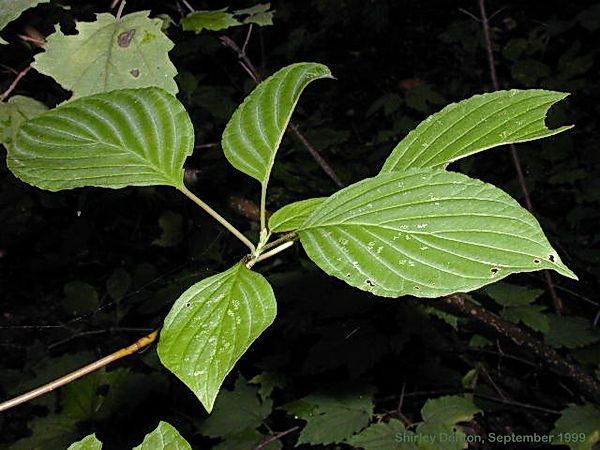
Cornus alternifolia
alternate-leaved dogwood, pagoda dogwood
Cornaceae
Plant Specifics
Form:
tree
Size:
10-15 (30) ft tall by 10-15 wide.
Life Span:
long-lived perennial
Flower Color:
white
Fruit Color:
blue, black
Phenology:
Deciduous
Noted For:
Showy Flowers, Fall Color, Interesting Foliage
Landscaping
Recommended Uses:
Small specimen tree. Can also work as an understory tree.
Considerations:
Light:
Part Sun, Shade
Moisture Tolerance:
Usually moist, occasional inundation ---- to ---- Not wet but not extremely dry
Salt Water Flooding Tolerance:
Unknown
Salt Spray/Salty Soil Tolerance:
Low/no tolerance of salty wind or direct salt spray
Soil or Other Substrate:
Sand, Loam, Organic
Suitable to Grow In:
8A,8B
Ecology
Wildlife:
Pollinators, Butterflies, Caterpillars, Birds, Mammals
Larval host for cecropia silkmoth ( Hyalophora cecropia ) and spring azure butterfly ( Celastrina ladon ).
Attracts long-tongued bees, short-tongued bees, wasps, flies, and butterflies.
Birds and small mammals consume the fruit.
Native Habitats:
Slope forest, upland hardwood forest. Bluffs, creek forests.

