

Conocarpus erectus
buttonwood
Combretaceae
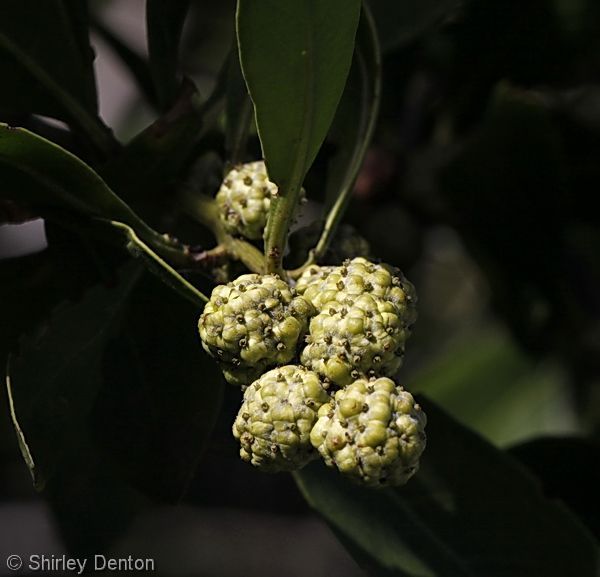
Plant Specifics
Form:
Size:
Life Span:
long-lived perennial
Flower Color:
Fruit Color:
Phenology:
Noted For:
Landscaping
Recommended Uses:
Considerations:
Light:
Moisture Tolerance:
Usually moist, occasional inundation ---- to ---- Somewhat long very dry periods
Salt Water Flooding Tolerance:
Unknown
Salt Spray/Salty Soil Tolerance:
High. Can tolerate significant and ongoing amounts of salt.
Soil or Other Substrate:
Sand, Lime Rock
Suitable to Grow In:
9B,10A,10B,11
Ecology
Wildlife:
Nectar source and larval host plant for martial scrub hairstreak ( Strymon martialis ) and tantalus sphinx ( Aellopos tantalus ) .
Nectar plant for amethyst hairstreak ( Chlorostrymon maesites ) and other butterflies.
Attracts bees ( http://www.tcbeekeepers.org/ ).
The seeds are primarily dispersed by water.
Native Habitats:

