
Coccoloba uvifera
seagrape
Polygonaceae
Plant Specifics
Form:
Size:
Life Span:
long-lived perennial
Flower Color:
Fruit Color:
Phenology:
Noted For:
Landscaping
Recommended Uses:
Very useful in settings subject to salt spray.
Considerations:
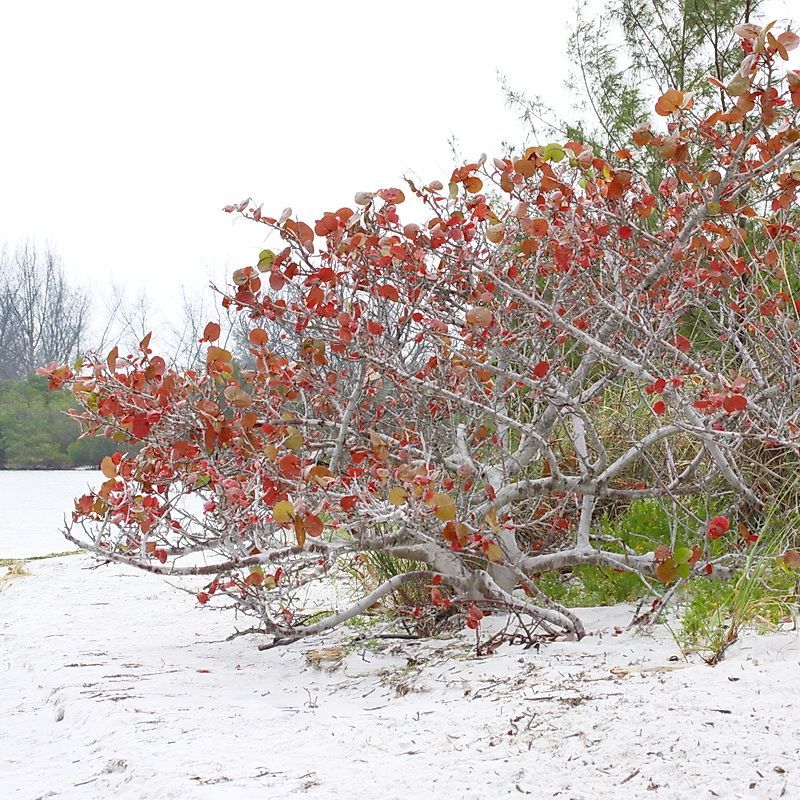
Fast growing, tends to sprawl. Very cold sensitive if planted inland from the coast even in the counties noted as its range. Unless cold is extreme, it will sprout back from the root.
May be damaged by hurricanes, but sprouts back quickly. Leaves take a long time to decompose, so plant where leaf litter is not a problem.
Light:
Moisture Tolerance:
Somewhat moist, no flooding ---- to ---- Very long very dry periods
Salt Water Flooding Tolerance:
Unknown
Salt Spray/Salty Soil Tolerance:
High. Can tolerate significant and ongoing amounts of salt.
Soil or Other Substrate:
Sand
Suitable to Grow In:
9B,10A,10B,11
Ecology
Wildlife:
Nectar plant for Florida duskywing ( Ephyriades brunneus ), julia ( Dryas iulia ), Schaus' swallowtail ( Papilio aristodemus ponceanus ), the introduced fulvous hairstreak ( Electrostrymon angelica ), and other butterflies.( IRC )
Attracts bee pollinators.
Birds and other wildlife consume fruit.
Native Habitats:

