

Clusia rosea
pitch-apple, autograph tree
Clusiaceae
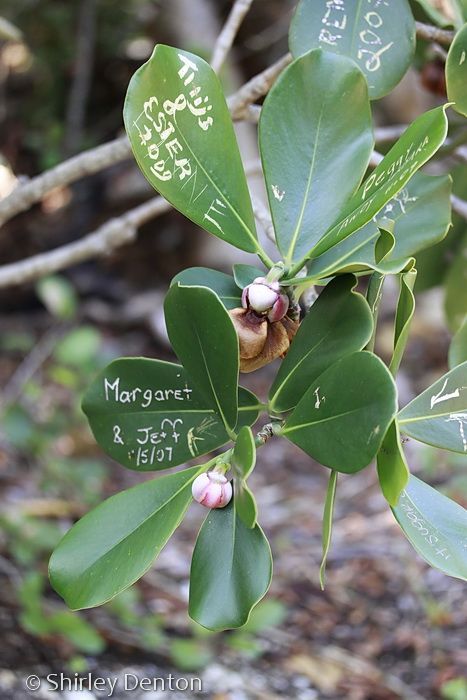
Plant Specifics
Form:
tree
Size:
25-50 ft
Life Span:
long-lived perennial
Flower Color:
white,pink
Fruit Color:
orange,green
Phenology:
Evergreen, blooms in warmer months
Noted For:
Showy Flowers, Showy Fruits, Hurricane Wind Resistance, Interesting Foliage
Landscaping
Recommended Uses:
Specimen tree. Flowers are open at night.
Considerations:
Easily spread by birds so it can become somewhat of a pest.
Light:
Full Sun, Part Sun
Moisture Tolerance:
Usually moist, occasional inundation ---- to ---- Very long very dry periods
Salt Water Flooding Tolerance:
Unknown
Salt Spray/Salty Soil Tolerance:
High. Can tolerate significant and ongoing amounts of salt.
Soil or Other Substrate:
Sand, Lime Rock
Suitable to Grow In:
10A,10B,11
Ecology
Wildlife:
Birds, Mammals
Can produce seed without pollination.
Dense foliage creates cover for birds and other wildlife ( https://www.plantcreations.com/ ).
Native Habitats:
Cultivated. According to Wunderlin (1998), probably native, but may not exist outside of cultivation today. Xeric and dry mesic hammocks, scrub.

